

Disclaimer: Some links on this site are affiliate links, meaning that if you click on a link and later make a purchase, we may earn a small commission at no additional cost to you.
Wadi Rum, a UNESCO World Heritage Site, has been home to people since prehistoric times and was a film set for Lawrence of Arabia and The Martian. It is, unsurprisingly, a popular place to visit whilst in Jordan among both tourists and Jordanians alike.
On our way from the airport to Amman, our taxi driver was saying that he and his family go at least once per year for a well deserved break.
Naturally, people have a lot of questions such as where to stay in Wadi Rum, what to do when you’re there, how long to stay, etc. which are just a few of the questions I hope to answer in this post.
Where to Stay
Deciding where to stay felt like it took forever! I used booking.com to find available camps and then had the fun of narrowing down all the many choices.
There are so many different options, you can sleep in an actual cave, or a Bedouin tent, or you can go for a more luxury tent or dome with a private bathroom.
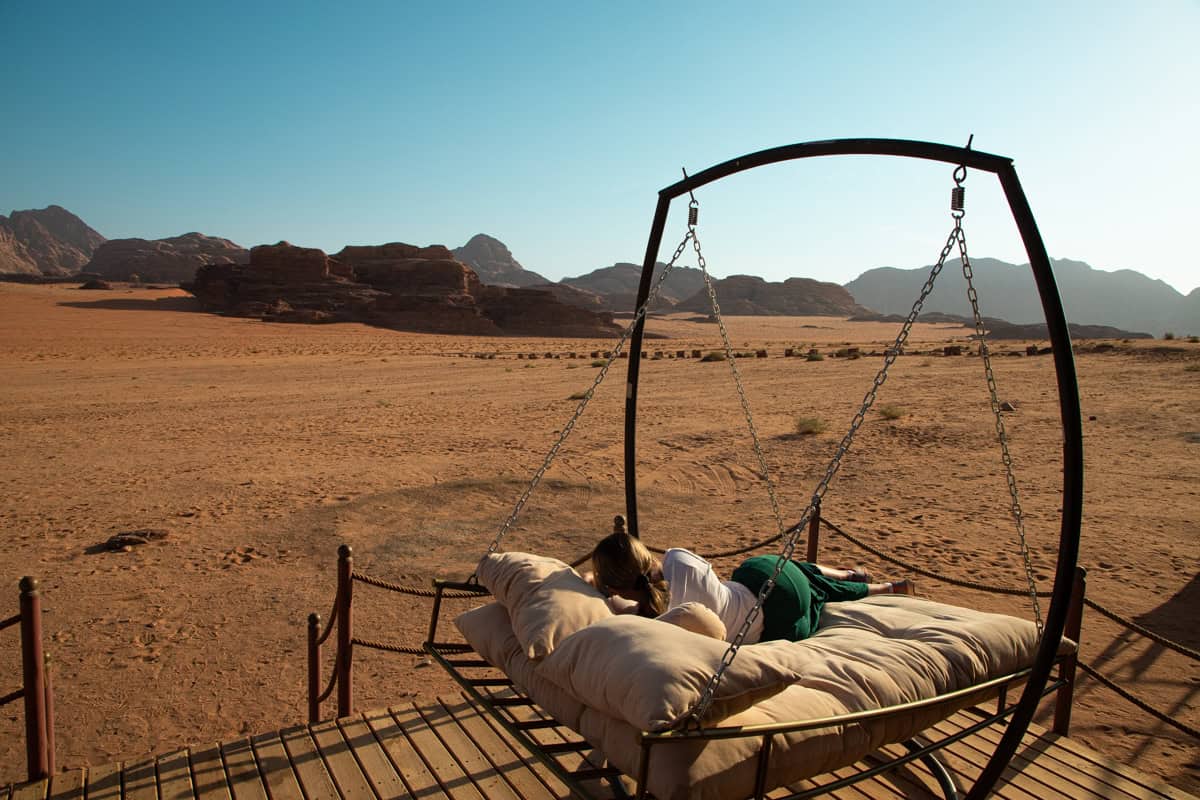
Of course, where to stay all comes down to what you want, we wanted a private bathroom; there was no way I would be leaving my tent in the middle of the night when I needed to use the loo! And we wanted a tent with a little outside terrace that we could sit on and so it was important to us to have an undisrupted view of the desert, we didn’t want to see the backs of any tents in front of us.
Price was a significant factor for us, there are some full-on-luxury camps which are extortionately expensive, so they were removed from the running for us.
After that, I looked at each camps individual website to find out what tours and activities they offered before going through reviews to see what people thought of the camps, and then it was just a case of finally choosing one to book from those remaining.
All of this to say, choosing where to stay is based entirely on what you want from the experience.
Where We Stayed
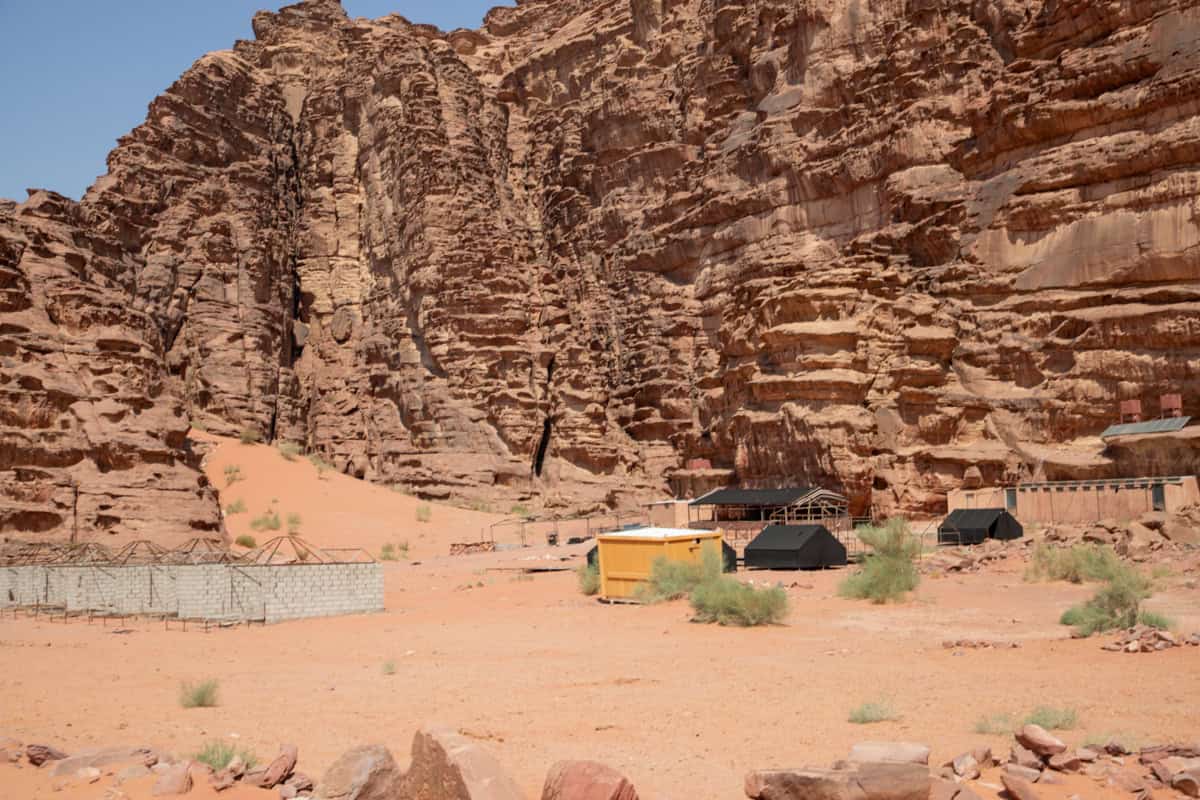
We opted to stay in a luxury suite at the Rum Stars camp and just look at it!
We had power from 7pm until 6am which meant we could charge our camera and GoPro after a day of exploring, and, most importantly, we had air conditioning which was most welcome in the heat!
We did take the opportunity to look inside one of the standard tents (thanks Mark and Leeanne!), in all honesty, I couldn’t have spent one night, let alone three, in there. I enjoyed the air conditioning in the luxury tent far too much!
In the end, our two and a half day tour with three nights accommodation came to somewhere in the region of 700 – 800 JOD.
Getting to Wadi Rum
We drove from Wadi Musa to the Wadi Rum Visitor Centre. This will always be your first stop when going to the desert as you either need to pay the entry fee, or get your Jordan Pass validated.
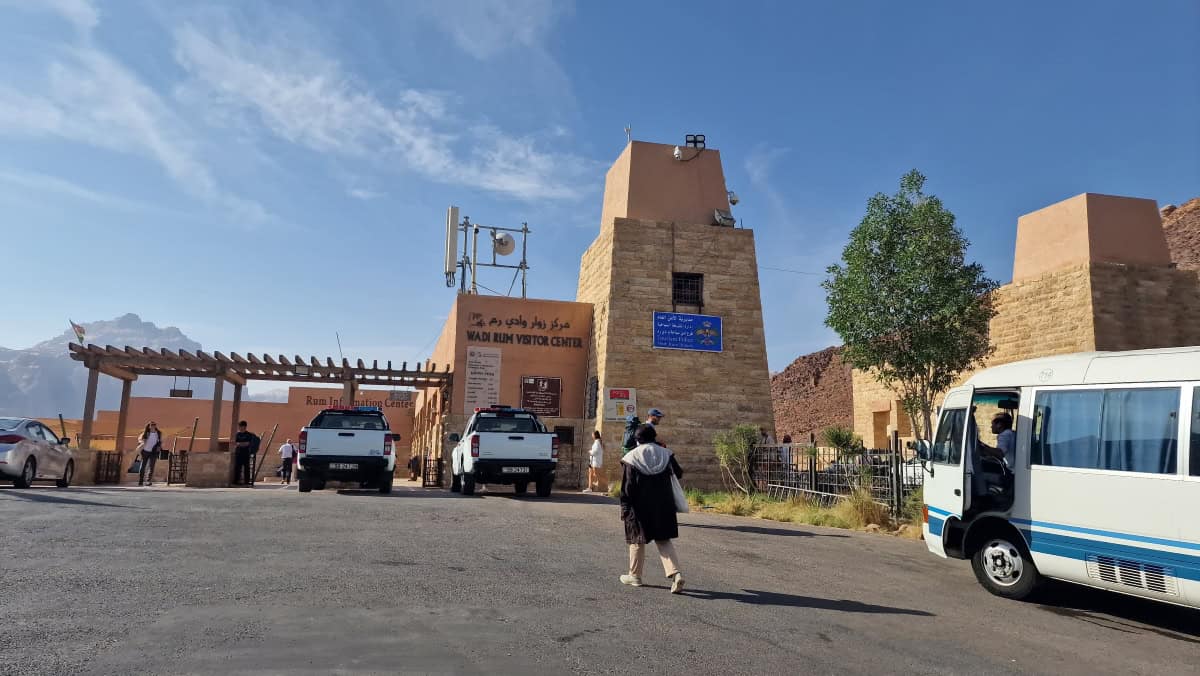
From there, we continued along the road to Wadi Rum Village. We stopped off at a shop in the village to pick up on some snacks before parking up at the offices of Rum Stars Camp.
Some camps have offices where you can park a car within the village or will inform you of other suitable arrangements. If you are arriving by taxi or bus, most camps will make arrangements for you to phone them when you get to the Visitor Centre and they will pick you up.
What to Do
The Wadi Rum desert is vast, and you could spend an inordinate amount of time exploring all there is to see.
The most popular tour, which the vast majority of camps and guides offer, involves driving from spot to spot in the back of a jeep as it follows every other jeep in a would-be convoy, which is to say that each of these sites can be extraordinarily busy.
As with anywhere, there are also quieter options. It’s always worth having a chat with your chosen camp/guide in advance to go over your preferences.
We wound up with a bit of a mix; read on for an account of what we got up to in the desert.
Day One
After arriving at the Rum Star office in the Wadi Rum village, we had a short wait before our group of eight clambered into the back of a jeep, which took us into the desert.
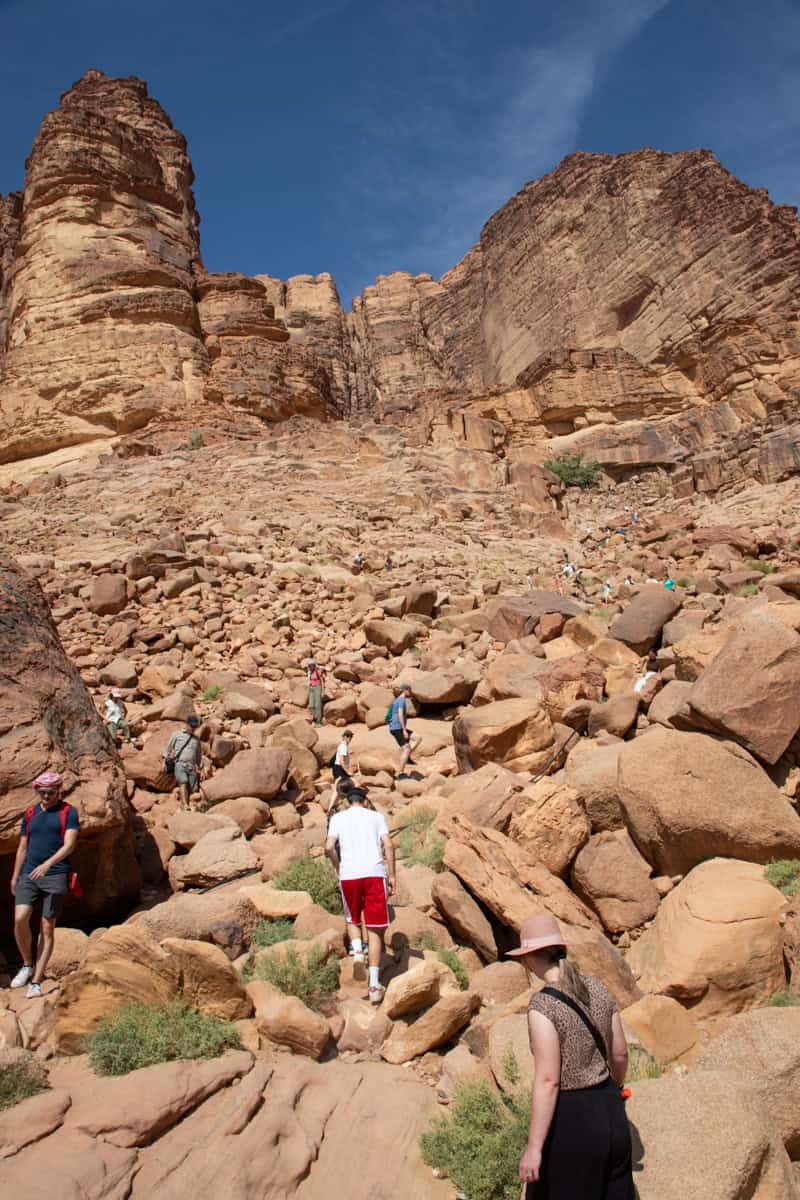
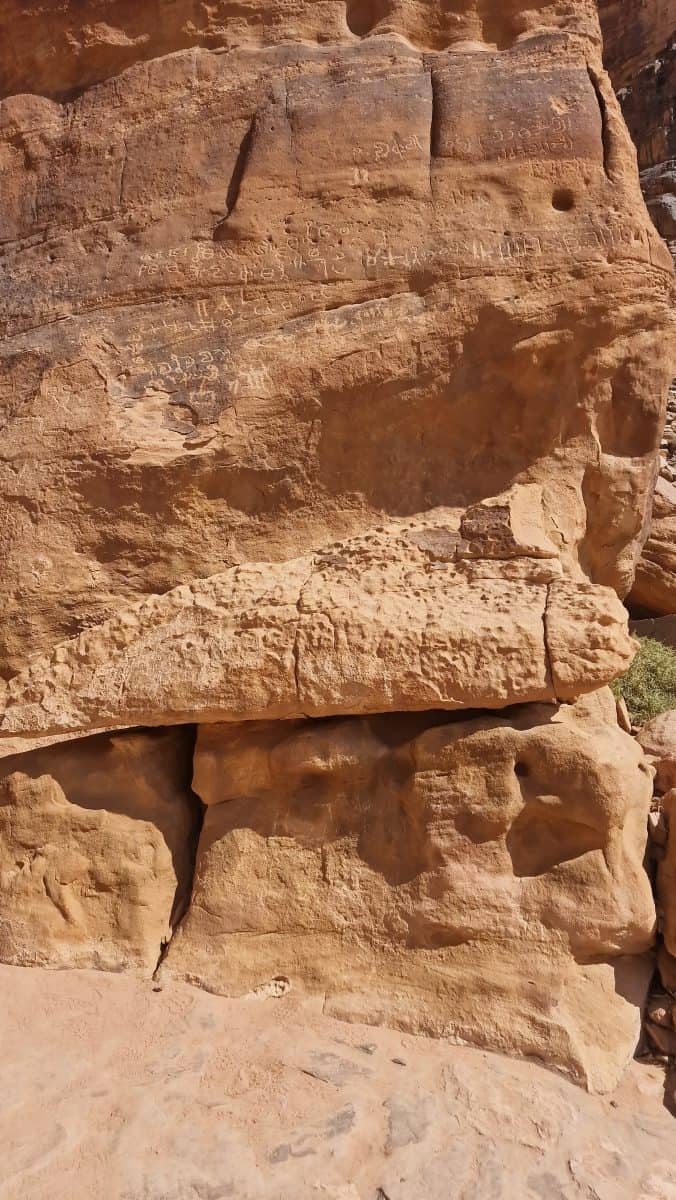
Our first stop was Ain Abu Aineh, meaning “Father of Aineh Spring”. Our guide gave us a brief introduction and then told us to be back at the jeep in half an hour. Hayden and I set off up the rocky path, although path may be too generous a term! We didn’t head all the way up to the spring, but we reached a high enough point to enjoy the view. After clambering back down, we looked at a boulder with Thamudic inscriptions before heading to the tent at the base of the spring for some respite from the heat.
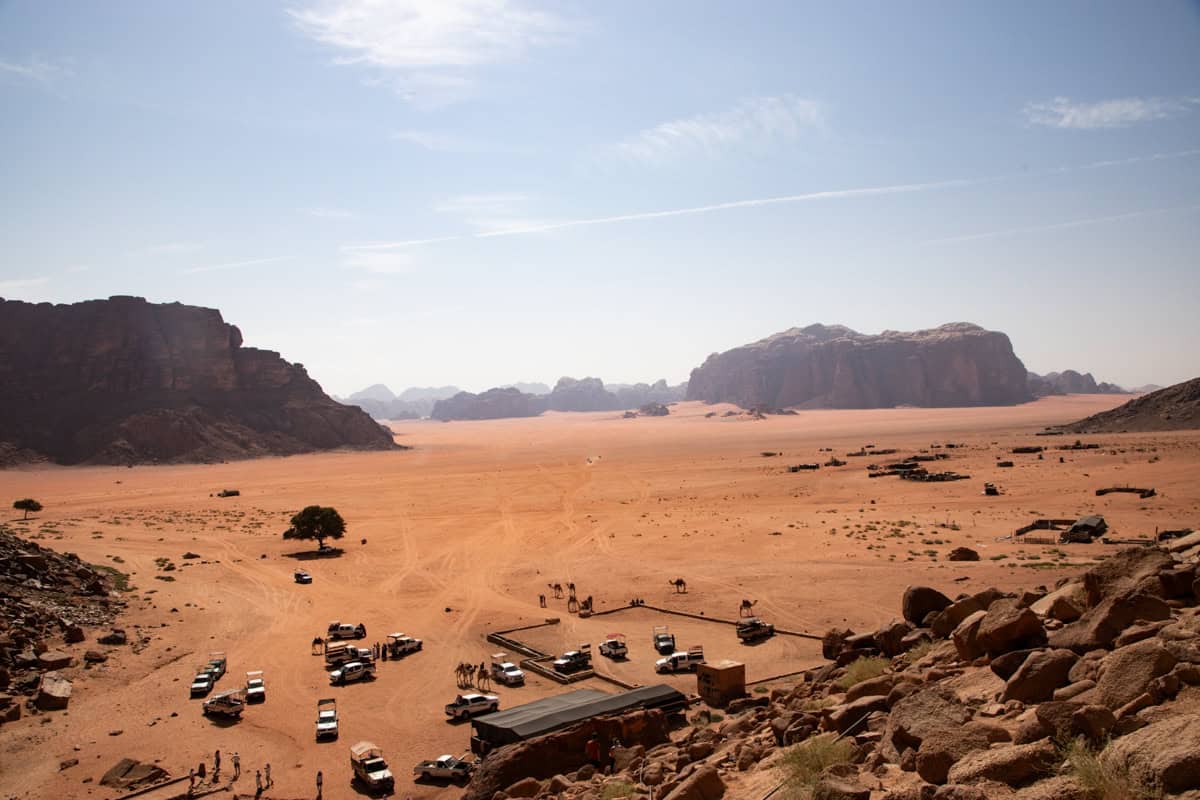
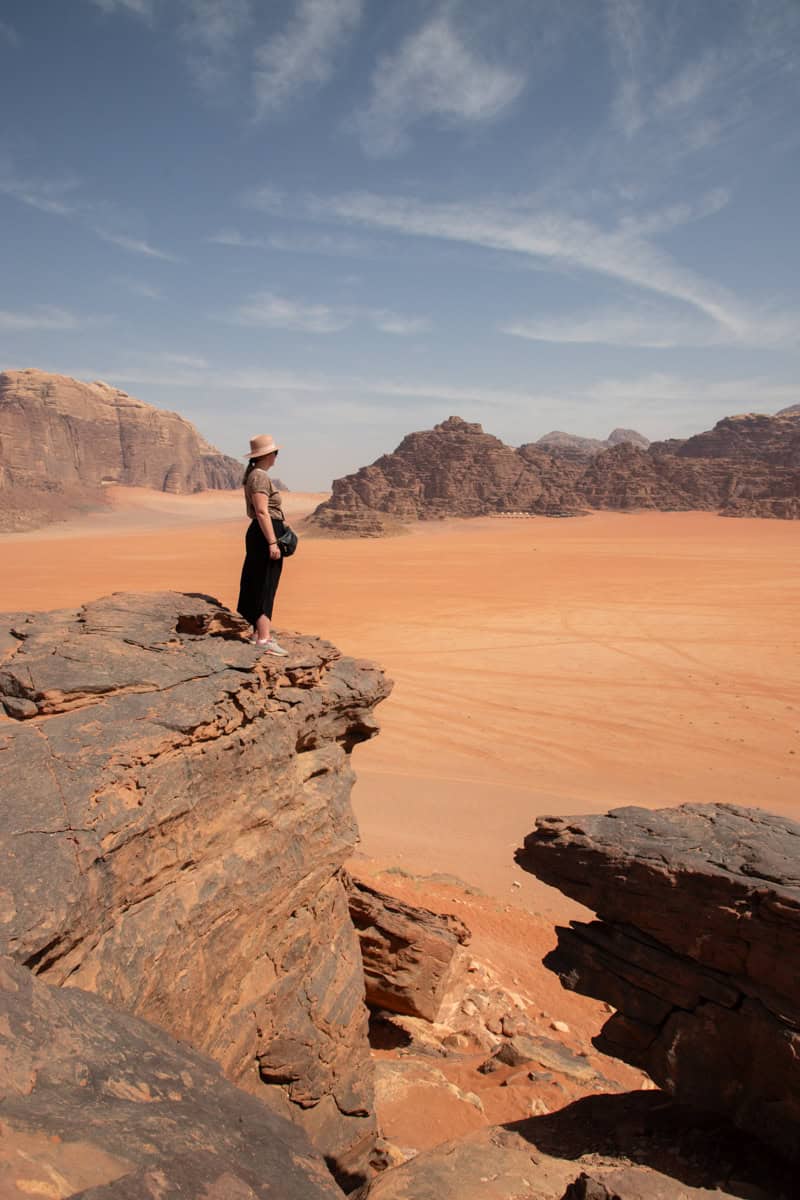
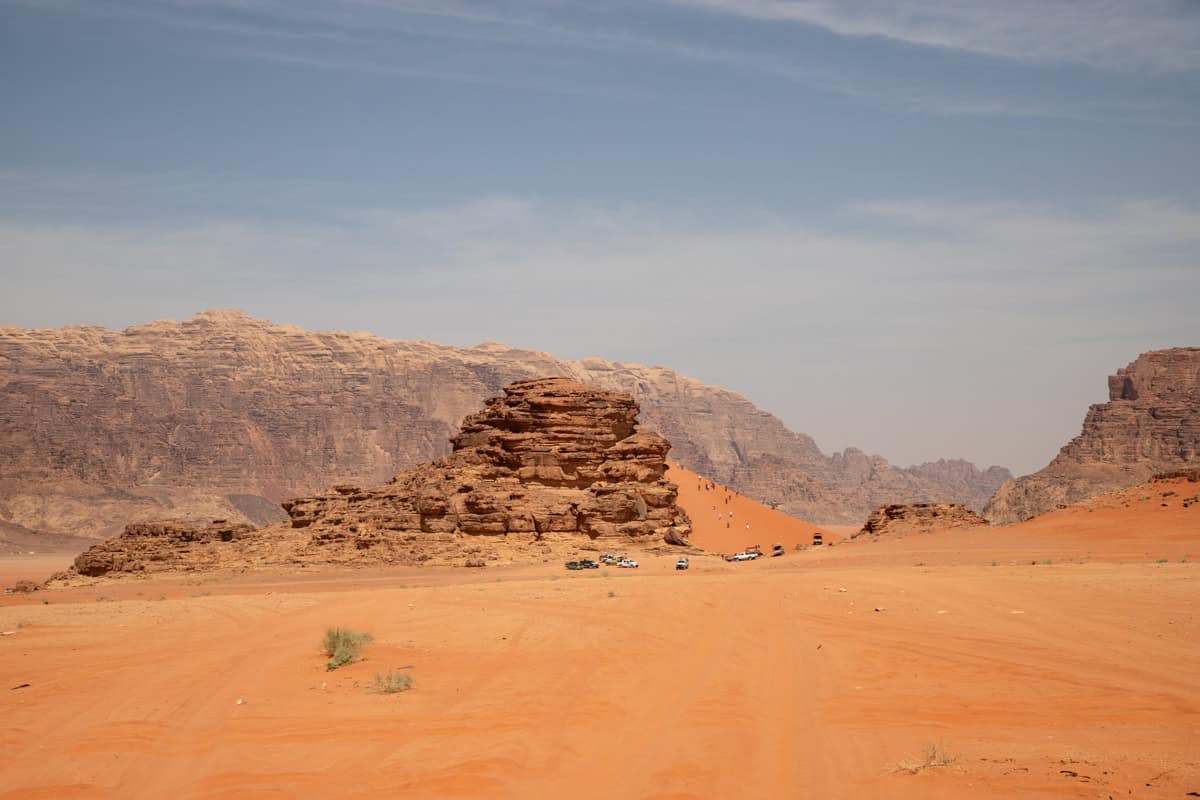
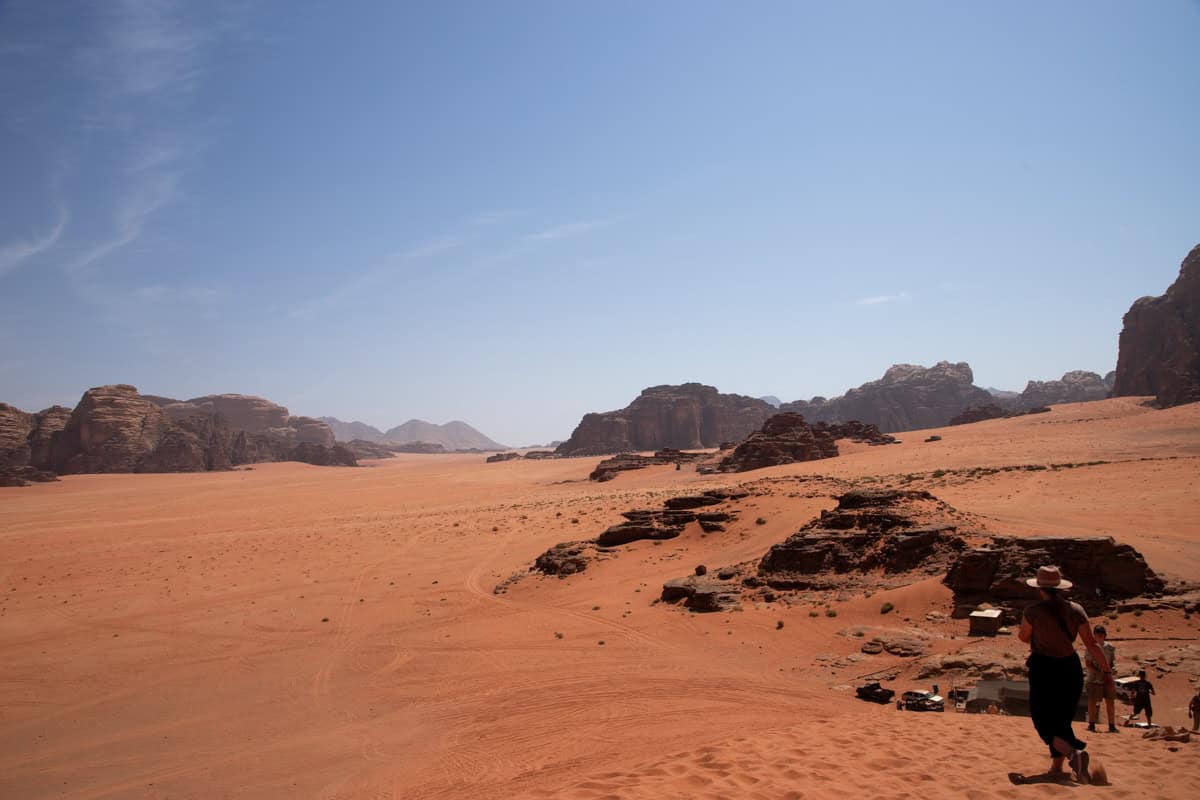
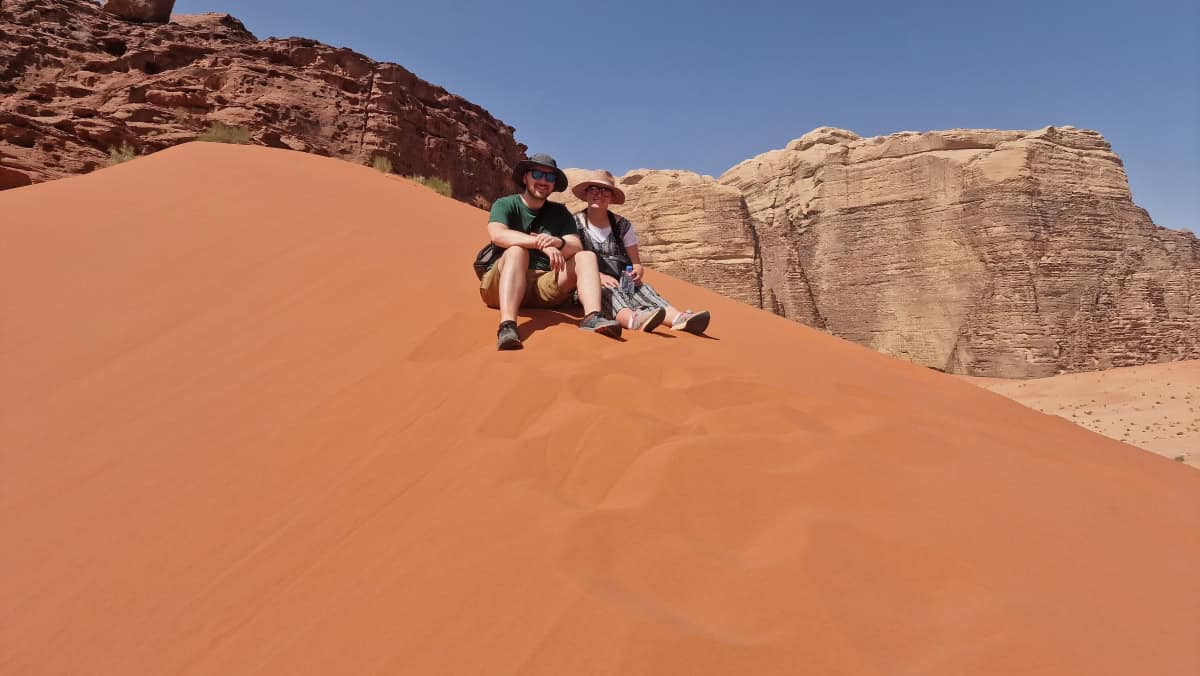
Back in the jeep, we headed to the Al Ramal sand dune, where our guide told us many shots from Lawrence of Arabia had been filmed. We were again given a time limit to climb up the dune, take in the views and be back at the jeep by. Nobody tells you how difficult it is to climb up a sand dune! Once at the top, we enjoyed the view for a little while. No matter where you stop in the desert, each viewpoint offers you a new view, and each one is so beautiful! We then navigated the route back down, although I found it easier to run rather than walk.
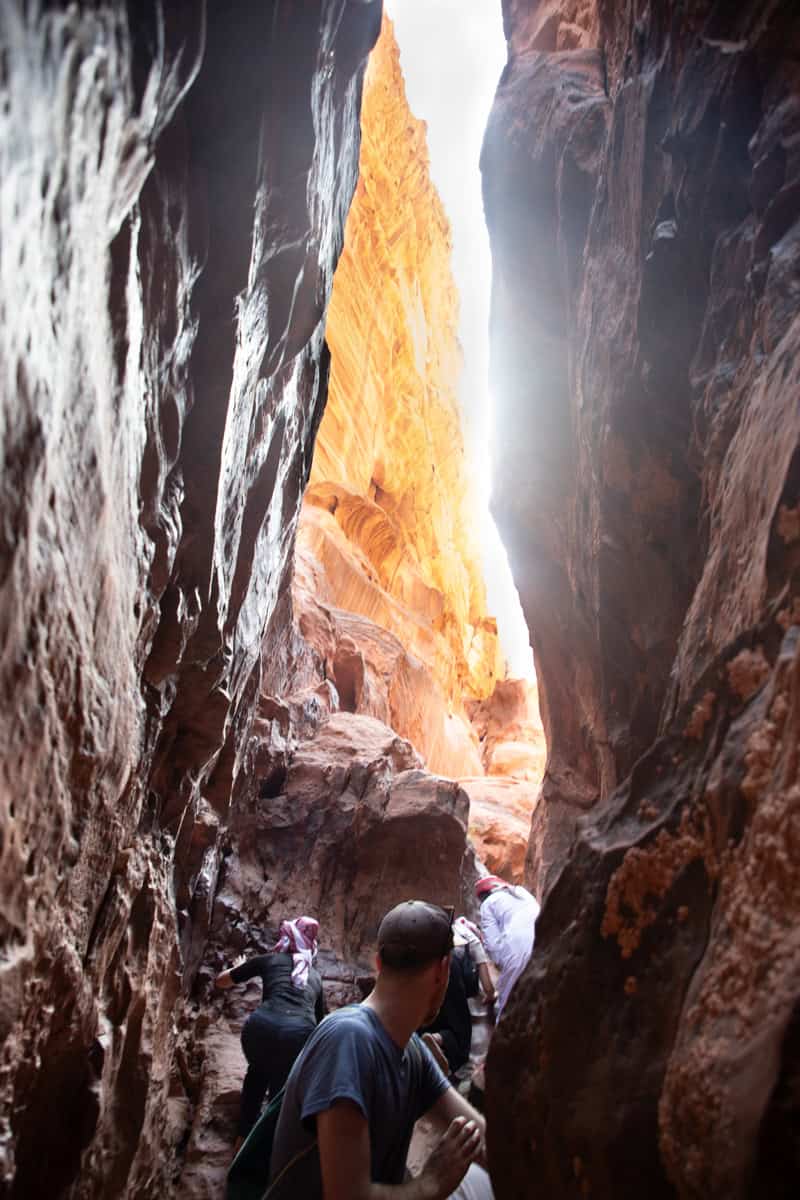
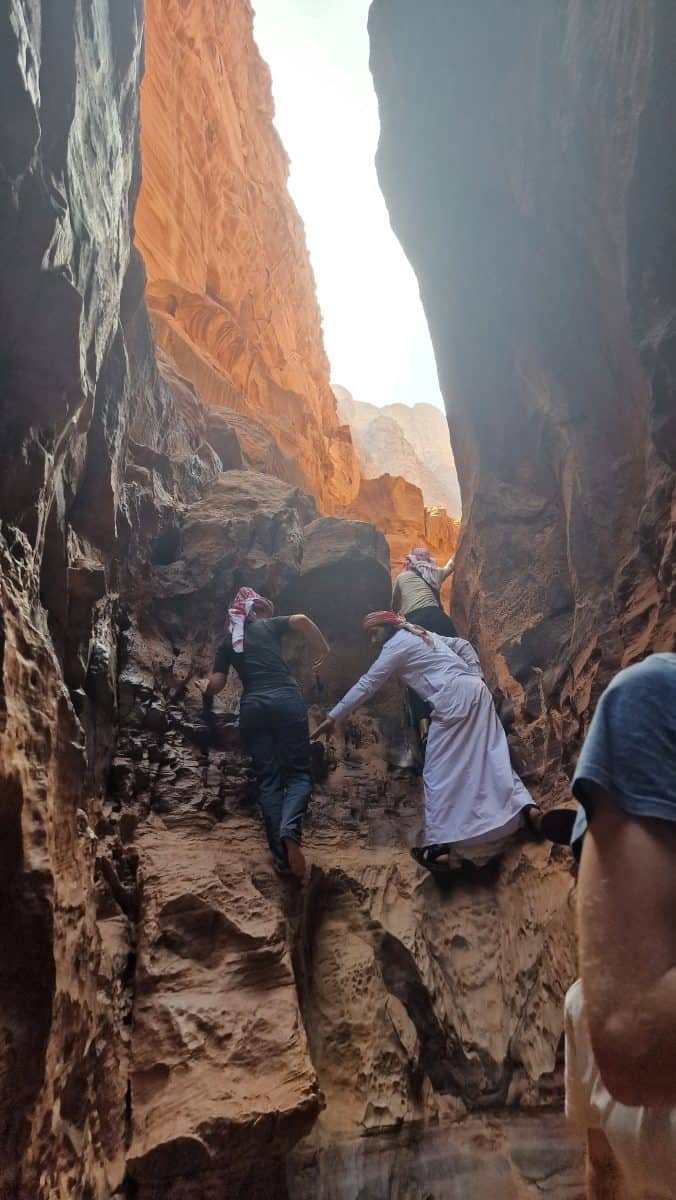
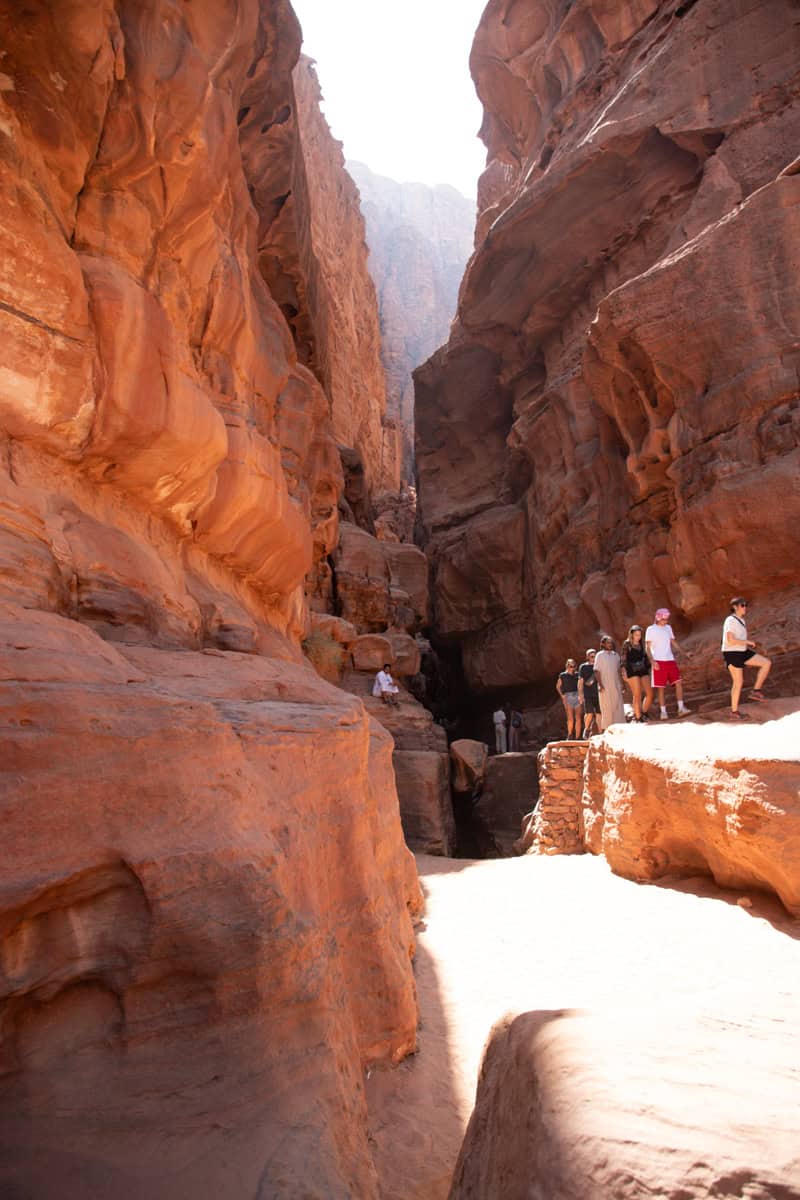
Our next stop was the Khazali Siq, which cuts into Jabal Khazali. You can walk as far as 150m before you need a guide and climbing equipment to navigate the rest. While there, we saw a guide helping two people along that route. Along the siq walls are inscriptions; although the path is so narrow, it’s hard to take the time to appreciate it as you have people waiting behind you and walking towards you.
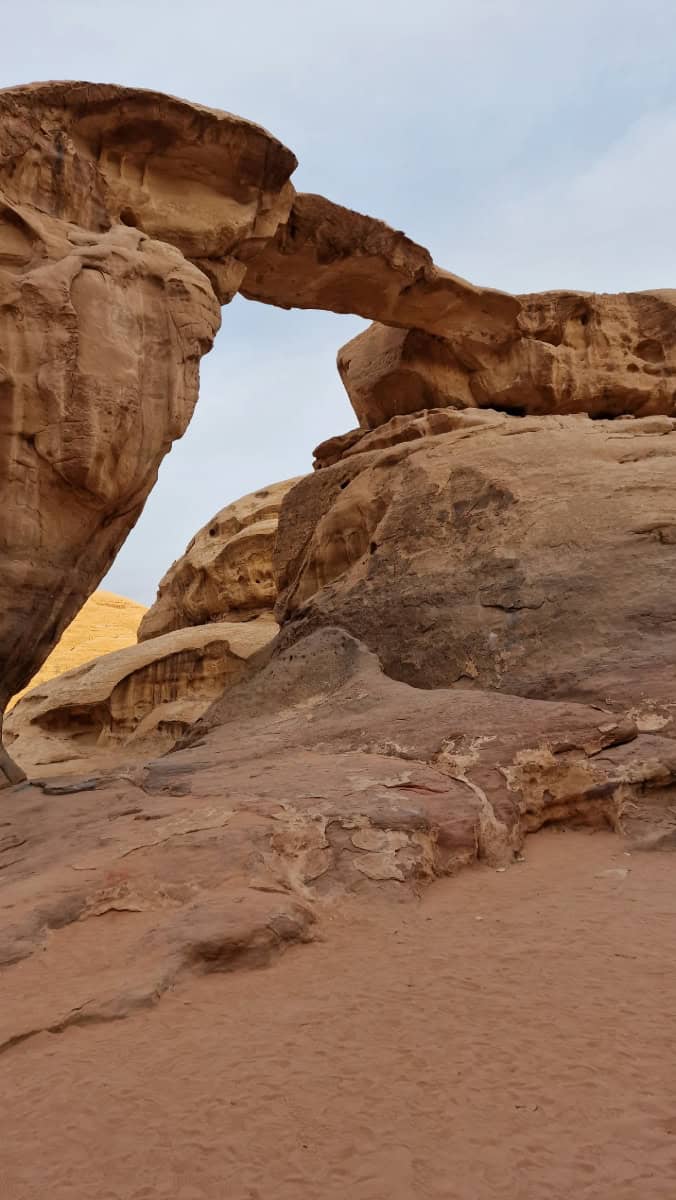
Continuing our tour, we went to Little Rock Bridge, which, as the name might suggest, is a little rock bridge; this was easy to climb and offered views across the desert.
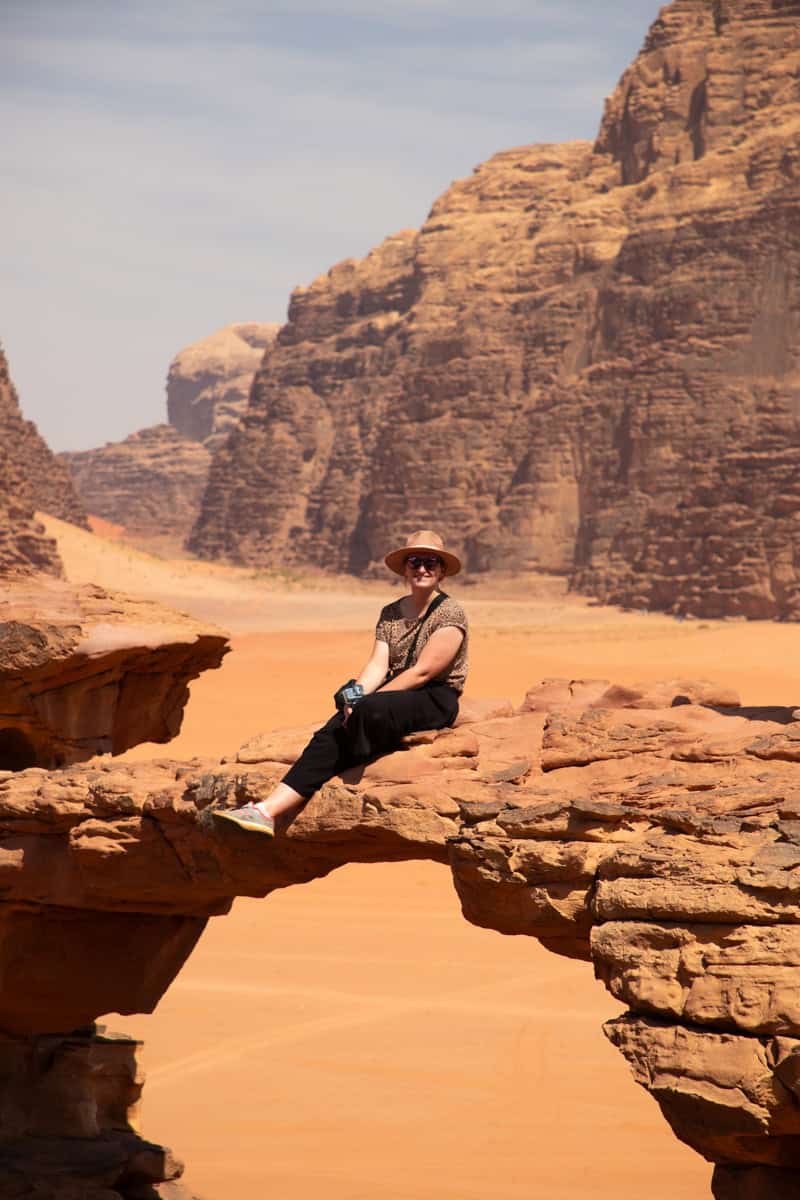
You may have to queue a little while for a photo opportunity, which is the case at most of the sights. Please be polite and wait a good distance away. It’s a petty complaint from me, but I found it disappointing how I made sure to keep out of everyone else’s photos only to wind up being photobombed (just thankful I’m an expert at editing photos!).
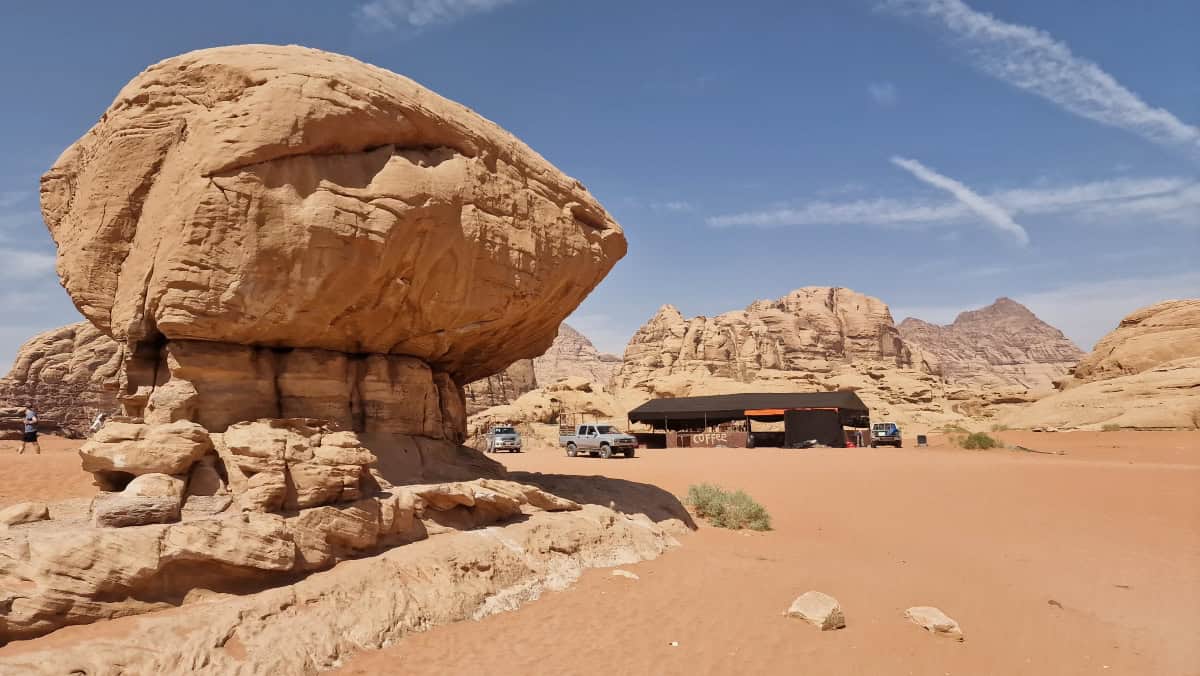
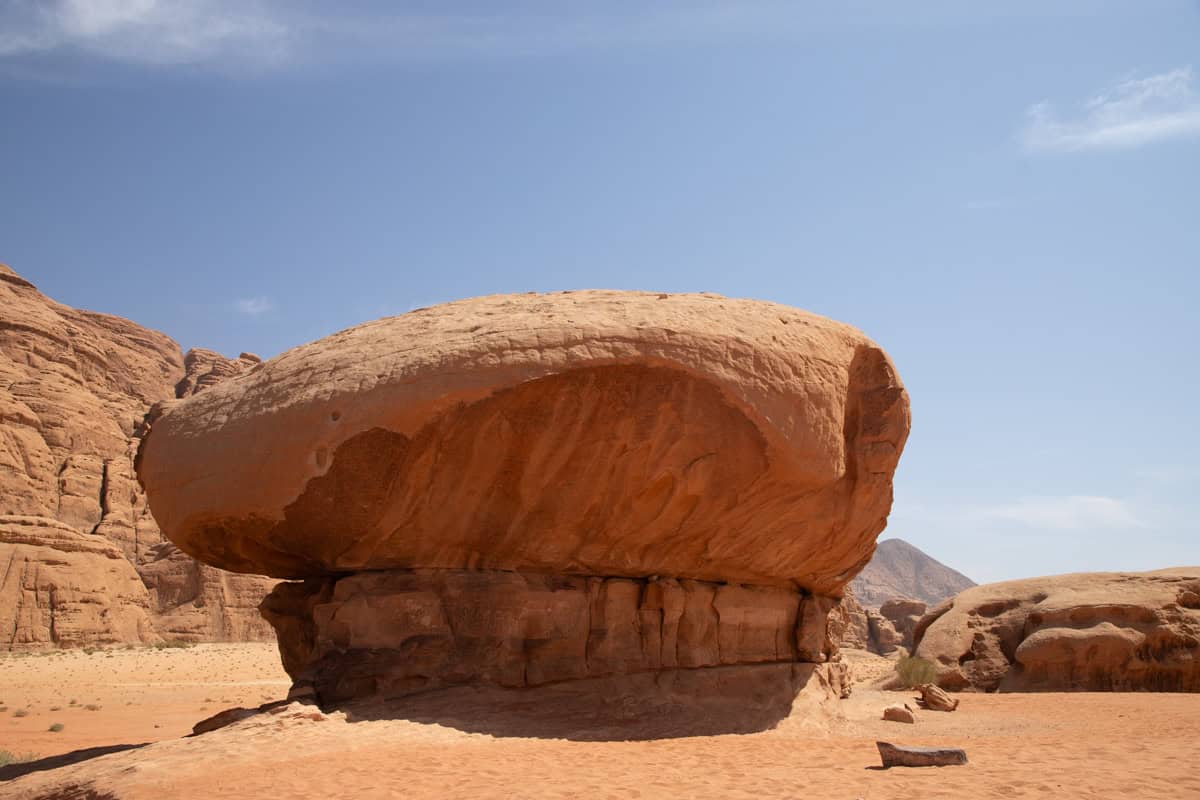
I hate to say it, but the next stop was a bit dull. It was Mushroom Rock, and it was at this point, we started to feel a bit fed up, as when we pulled up, we weren’t told anything of significance, just to “take photos”. It was only through my own reading and research that I learned that Bedouin herders would use rock formations such as this as they provide a sheltered area where you can take respite from the desert heat. This information would have been great to have on the tour, rather than the only focus being on taking pictures.
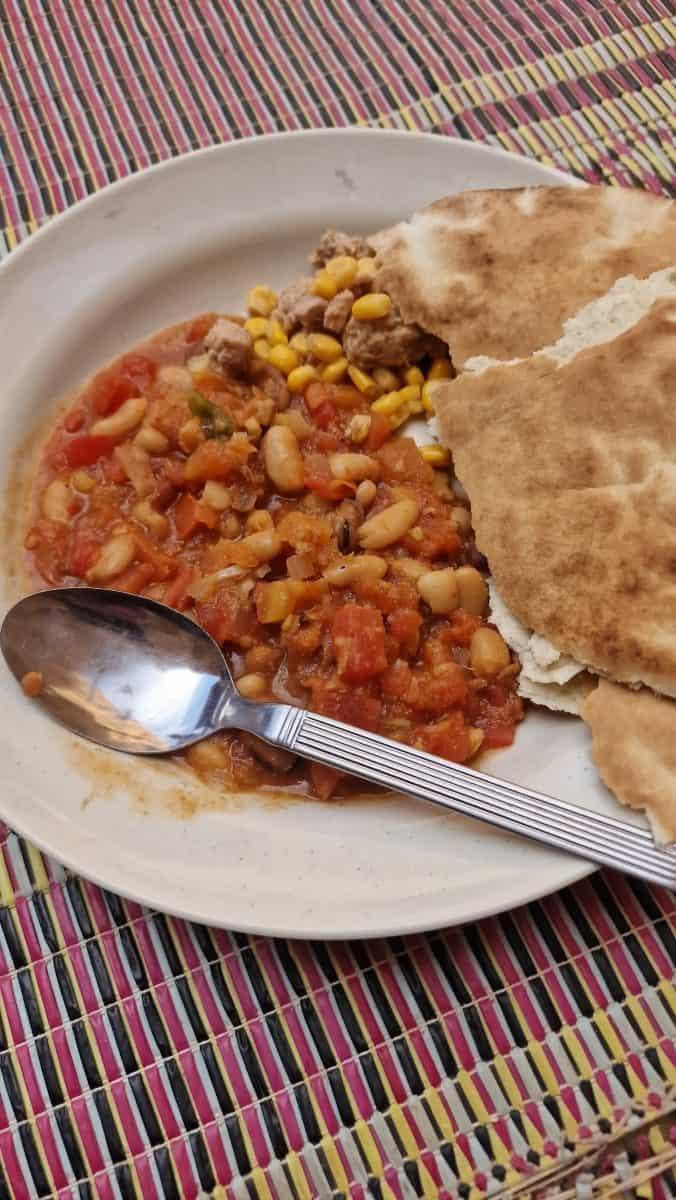
After that, it was time for lunch. We stopped in a shady canyon to enjoy a butter bean stew served with bread, moutabal (eggplant dip), hummus, and tuna and sweetcorn. After eating our fill, we were left to have a nap for about an hour and a half. It was quite bizarre for us at first, but it makes sense as it means you’re out of the sun for the hottest part of the day.
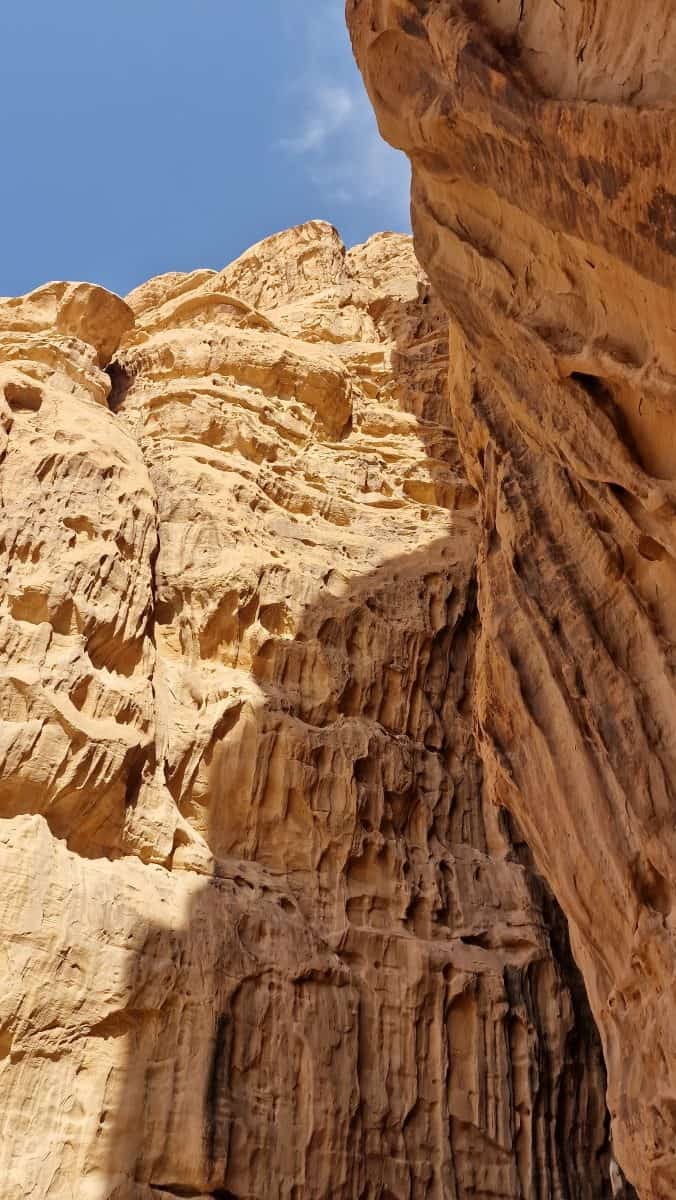
After a relaxing lunch break, we went to Umm Rashid canyon, where we walked down it, turned around, and walked back. There isn’t really anything much to say about this one, it was a canyon.
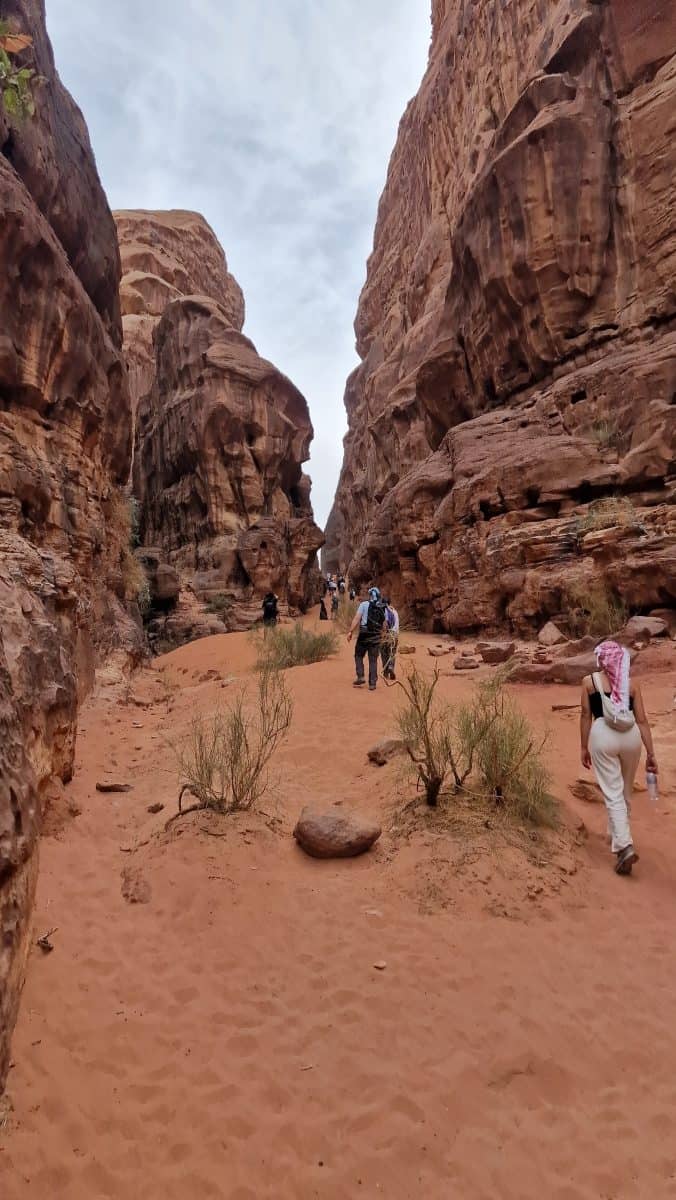
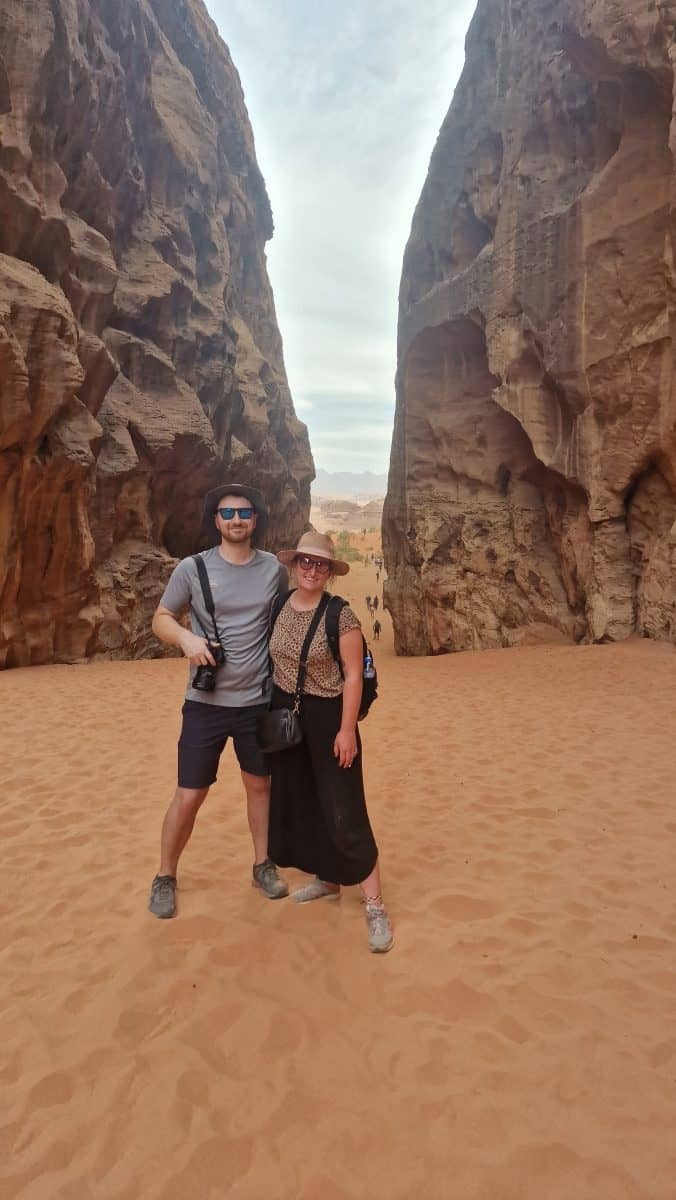
Burrah Canyon was our next destination. Our guide dropped us off at one end, and then we walked through and met them at the other side. The best part of this was at the end, where we got to try out sandboarding!
Sandboarding was terrifying and thrilling, but oh my goodness, the dune was so steep, I feel like it took me an age to climb up it!
I obviously had to include videos, just please excuse the screaming on mine!
For our penultimate stop, we went to Umm Fruth Rock Bridge. This one looked a slight bit trickier to climb, but we were so tired, we didn’t even attempt it, we were ready to just head back, shower off all the sand and get some food!
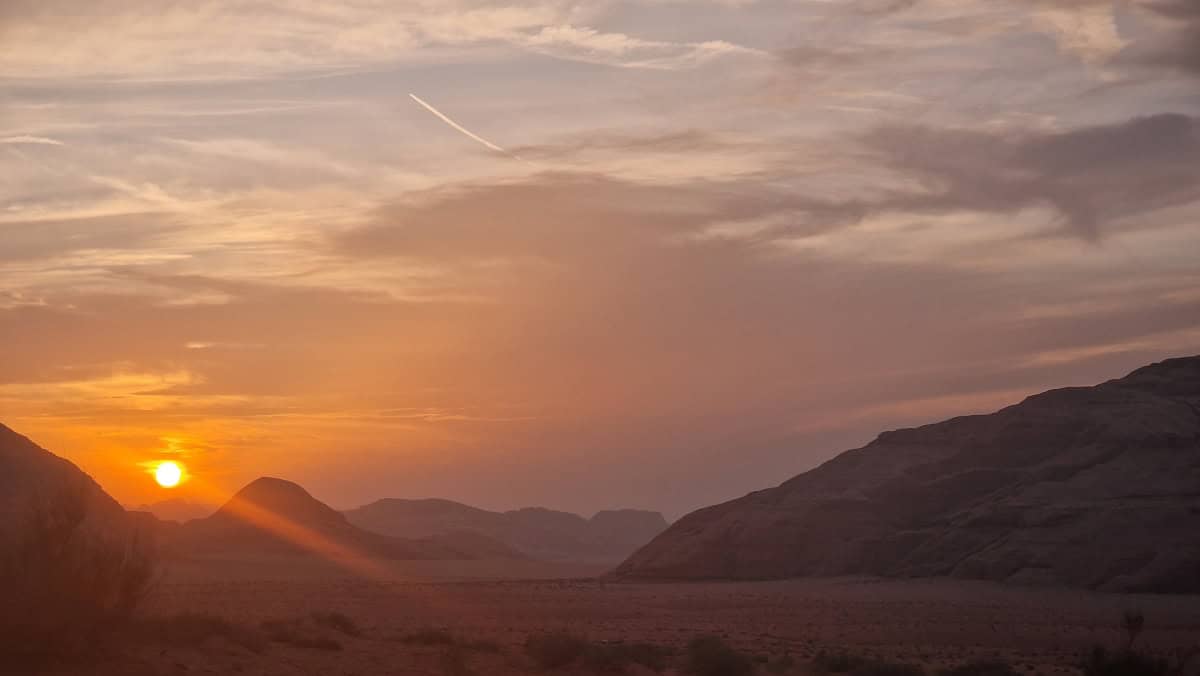
Finally, we settled down in the desert with some Bedouin tea and watched the sunset before heading back to camp.
Day Two
After breakfast, we had a little bit of downtime in our “tent” before we met up with our guide for the day, Mohammed. There were only four of us on this tour and we were promised less touristy places.
I can’t tell you everywhere that we saw with Mohammed, some of the places aren’t in the guidebooks and they’re just spots that locals know about. I’ll do my best to explain everything we saw and provide lots of pictures!
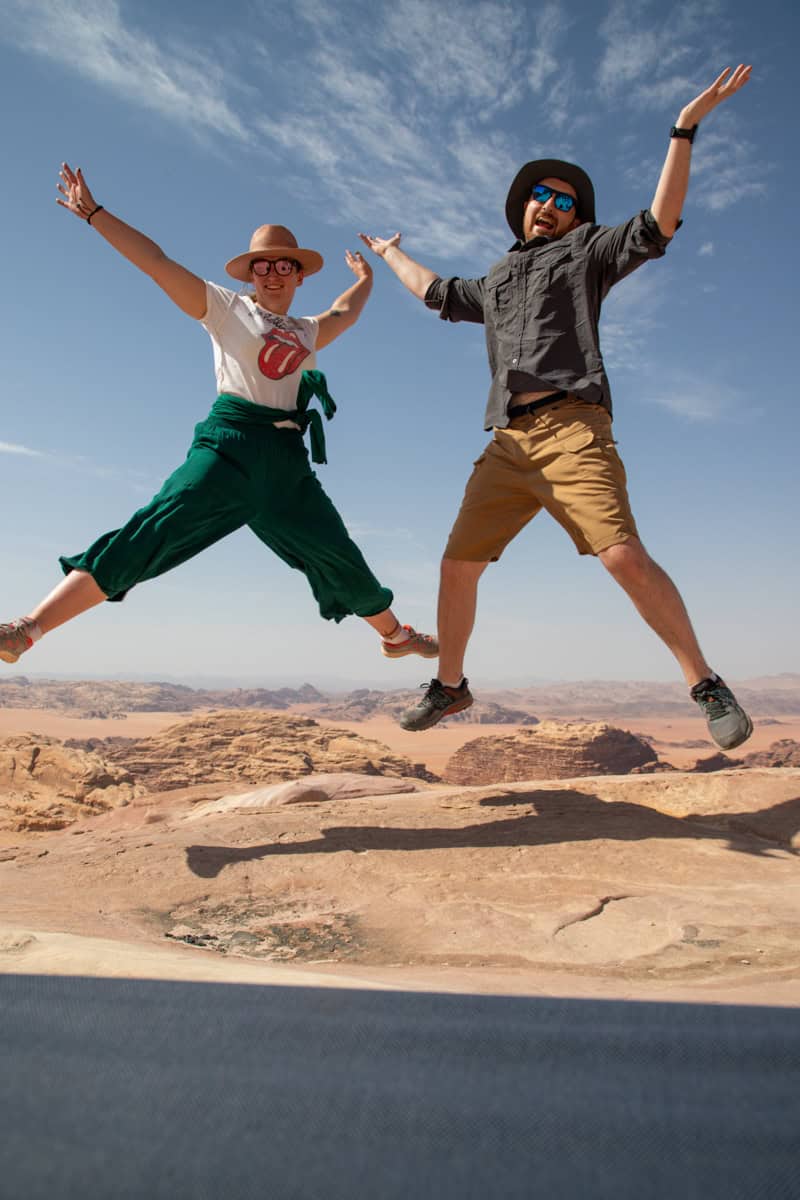
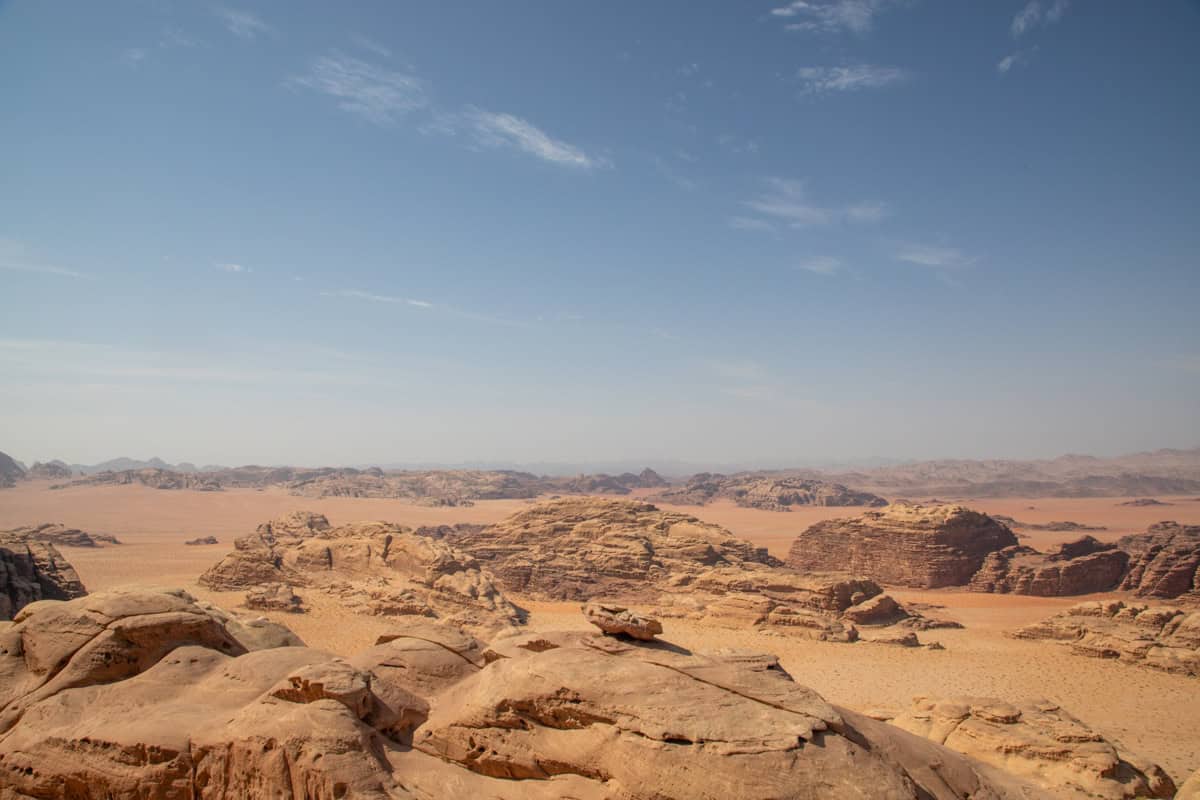
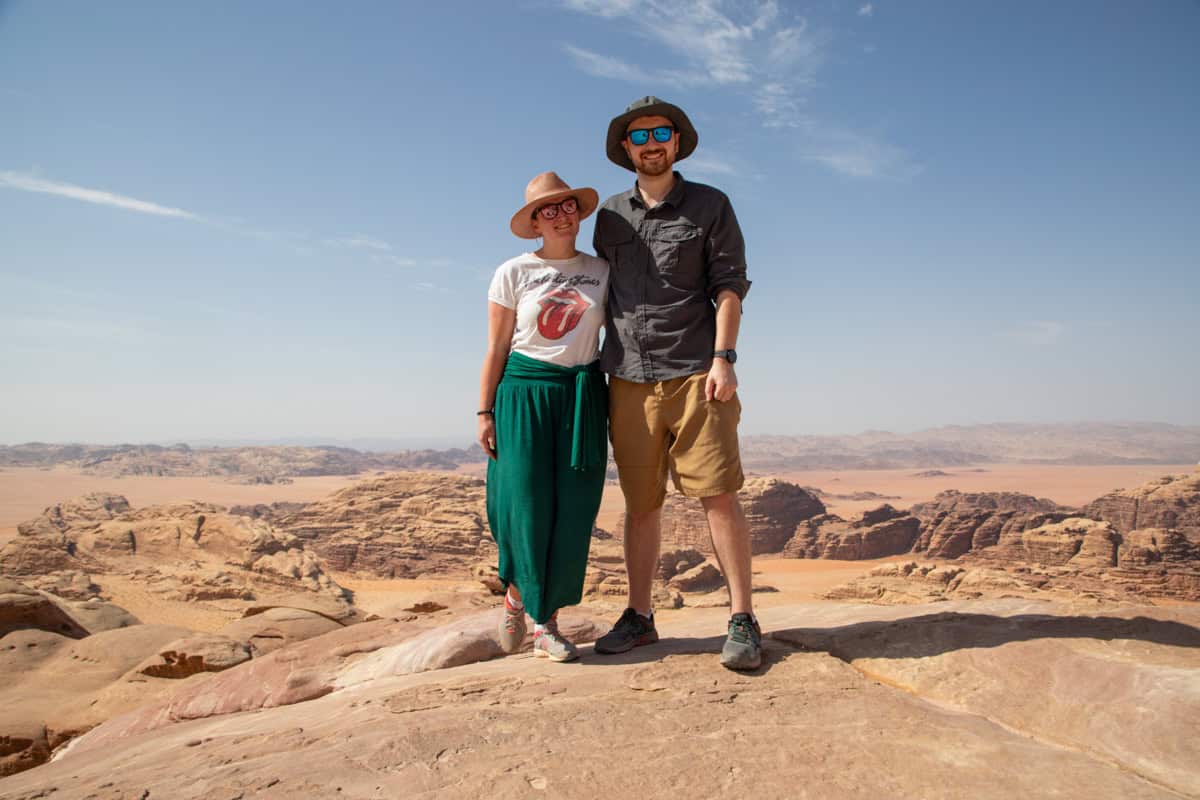
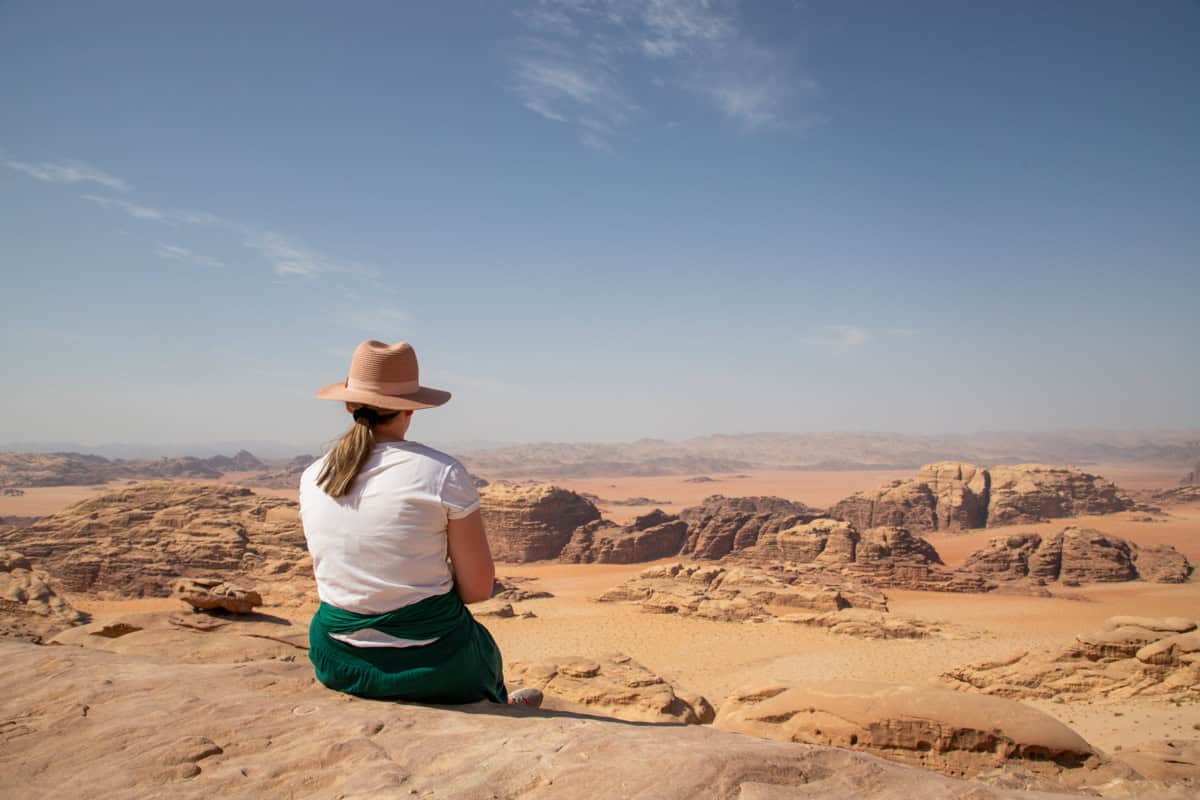
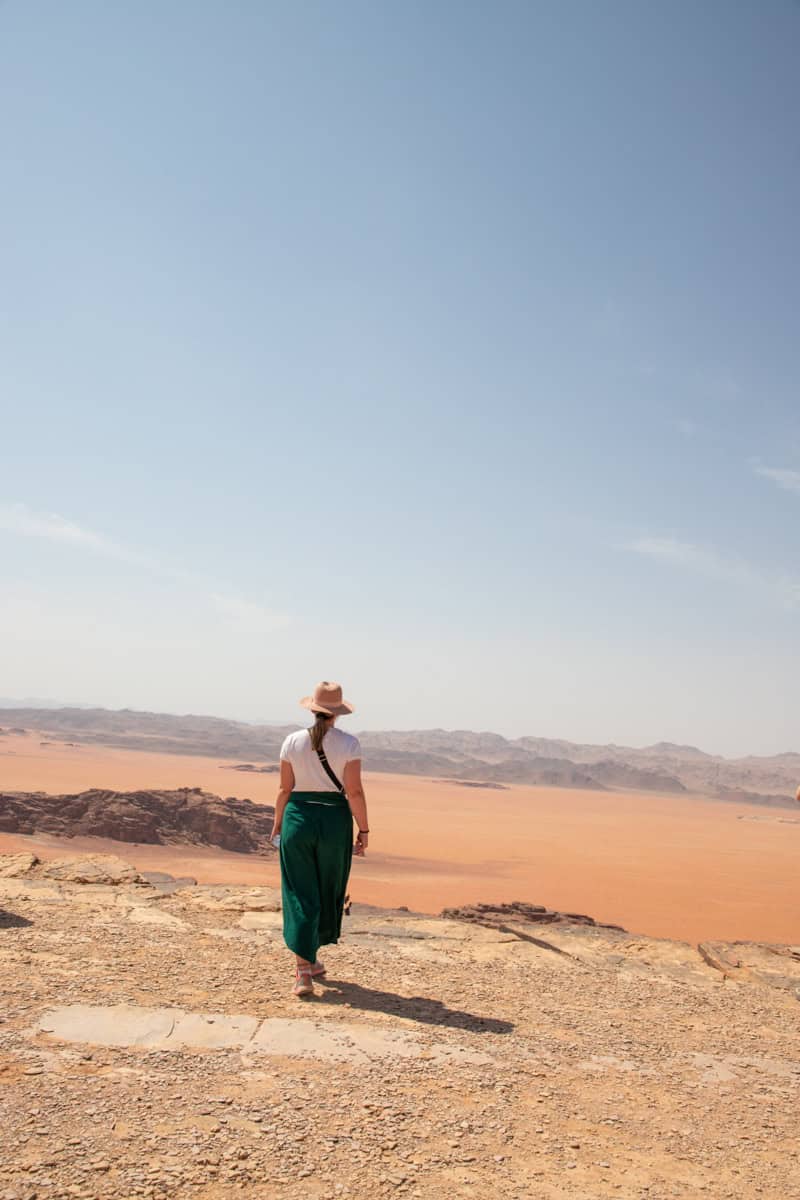
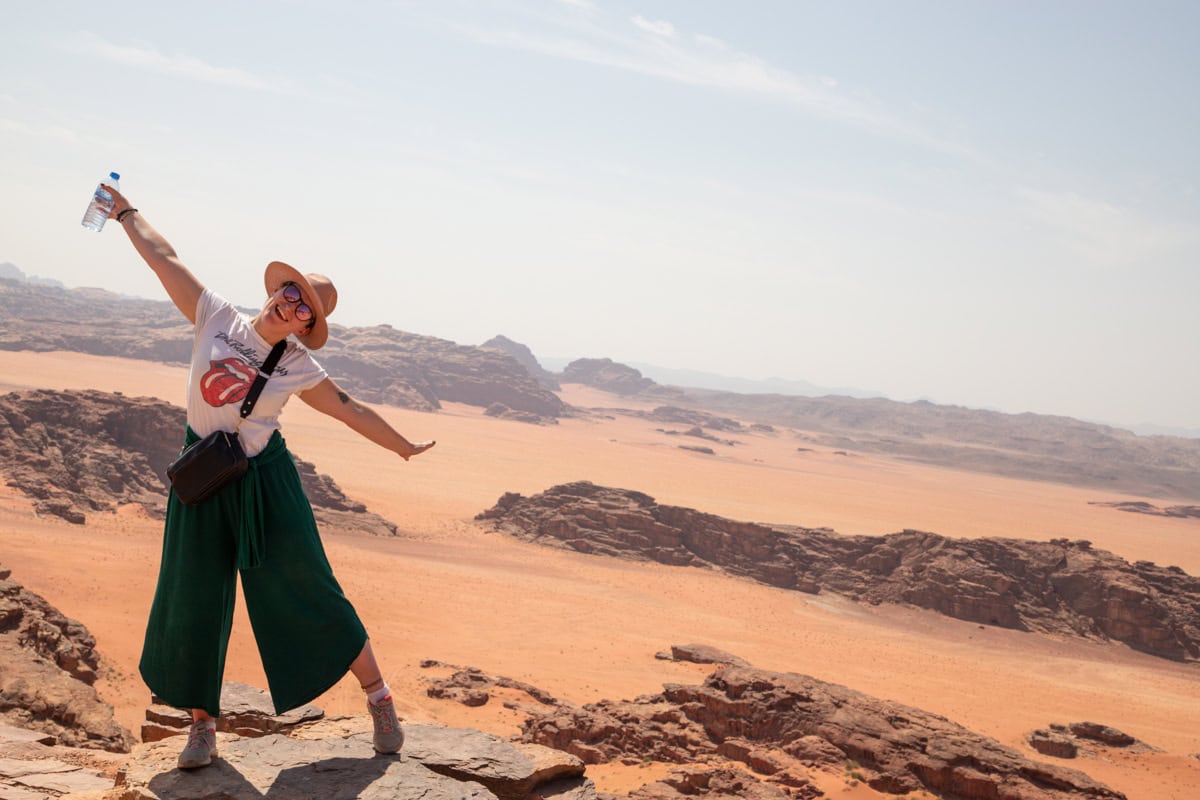
For our first stop, we walked up to a viewpoint, and the desert just went on as far as the eye could see. We were on quite a flat plateau, and our guide revealed he occasionally spends the night there just to enjoy the peace and quiet, and it isn’t hard to see why.
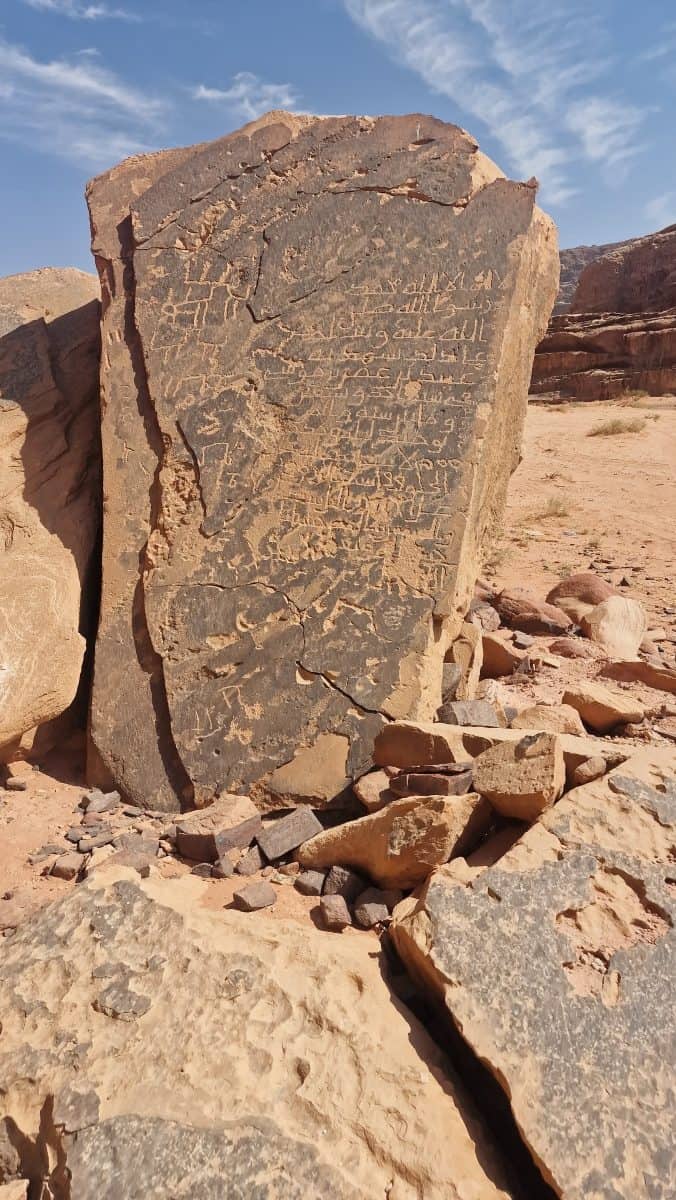
After walking back down, and strolling through a canyon, our guide drove us to a boulder which had a Kufic inscription dating back roughly 1400 years, around the early stages of Islam.
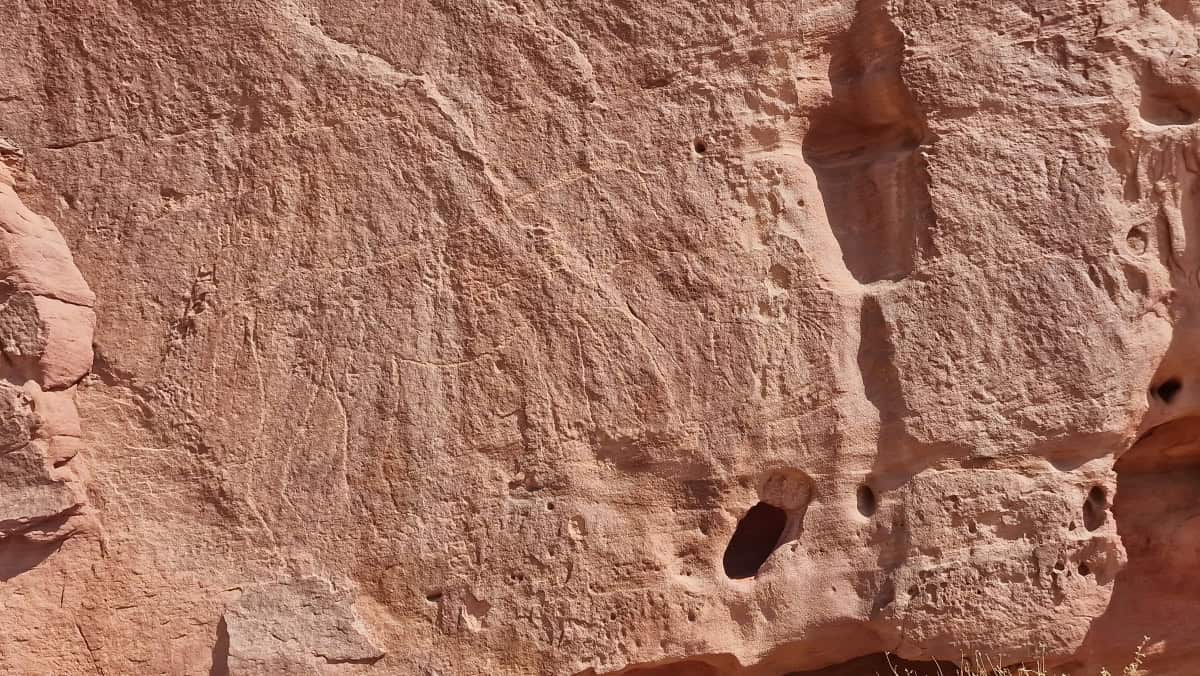
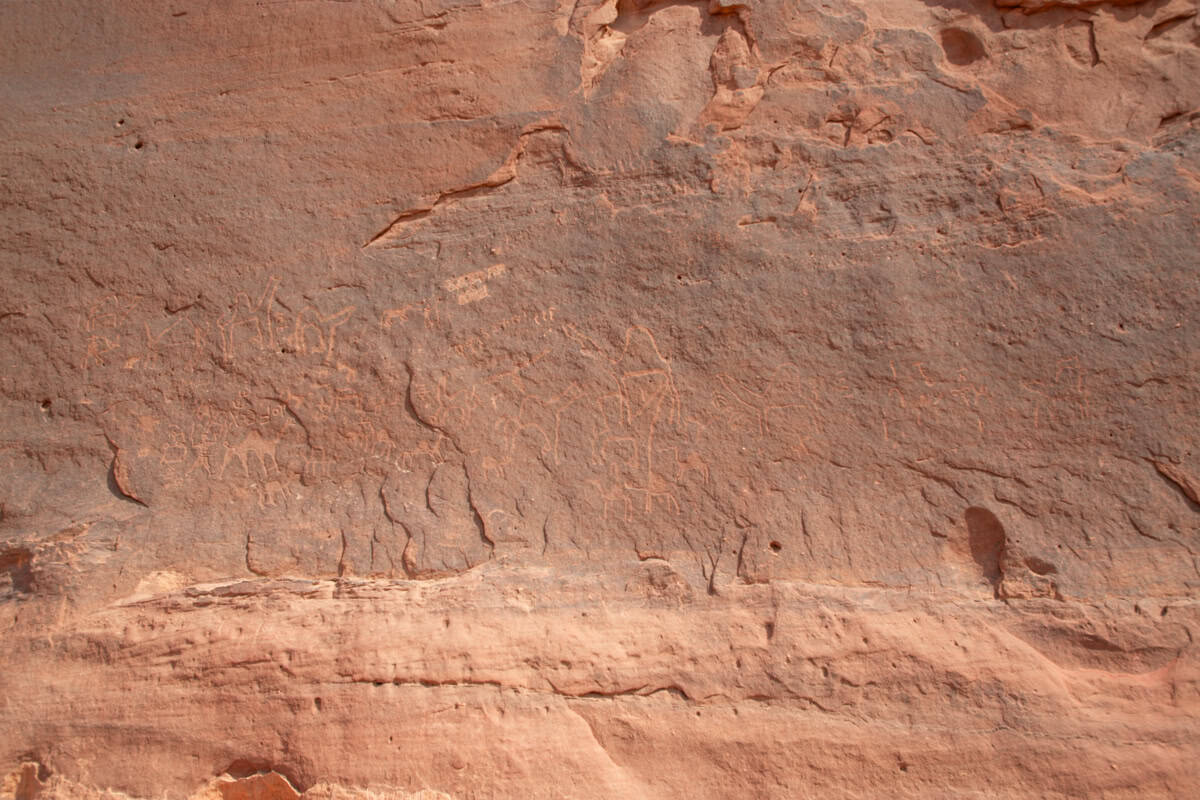
After that, we stopped at a few spots to look at petroglyphs. In the image on the left, you can vaguely see the outline of a lion which is thought to be from 2500 years ago.
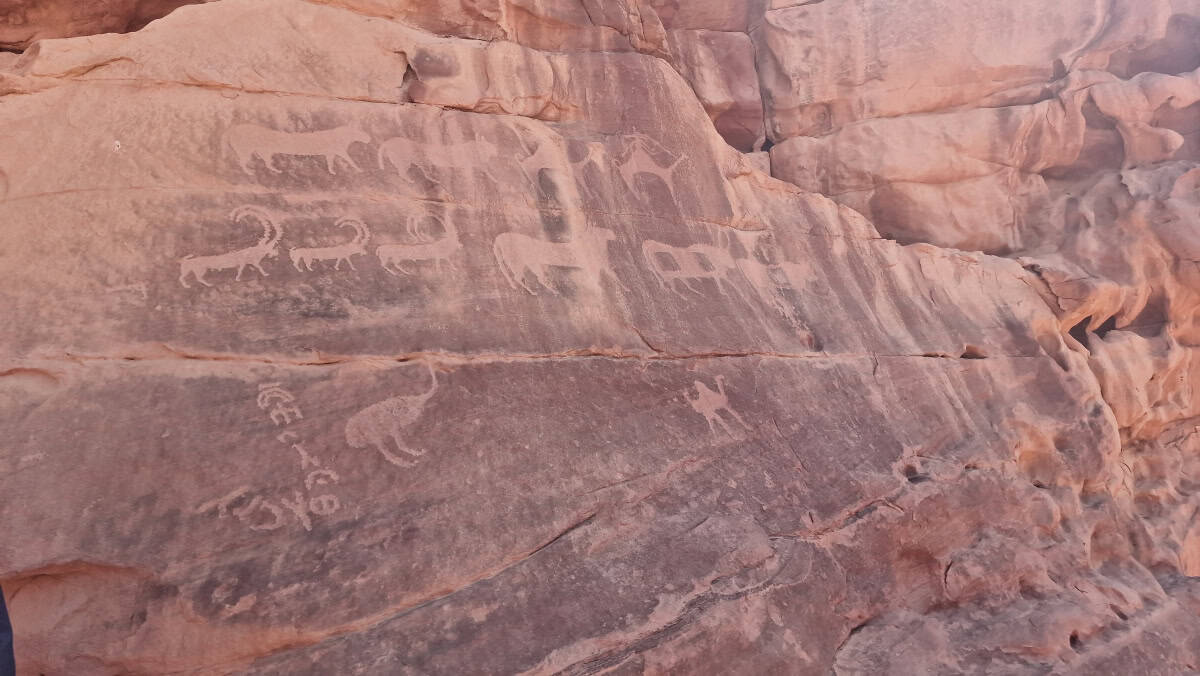
The one on the right is thought to be newer, and depicts a range of animals such as a hyena, a lion, camels, ibex, cows and an ostritch.
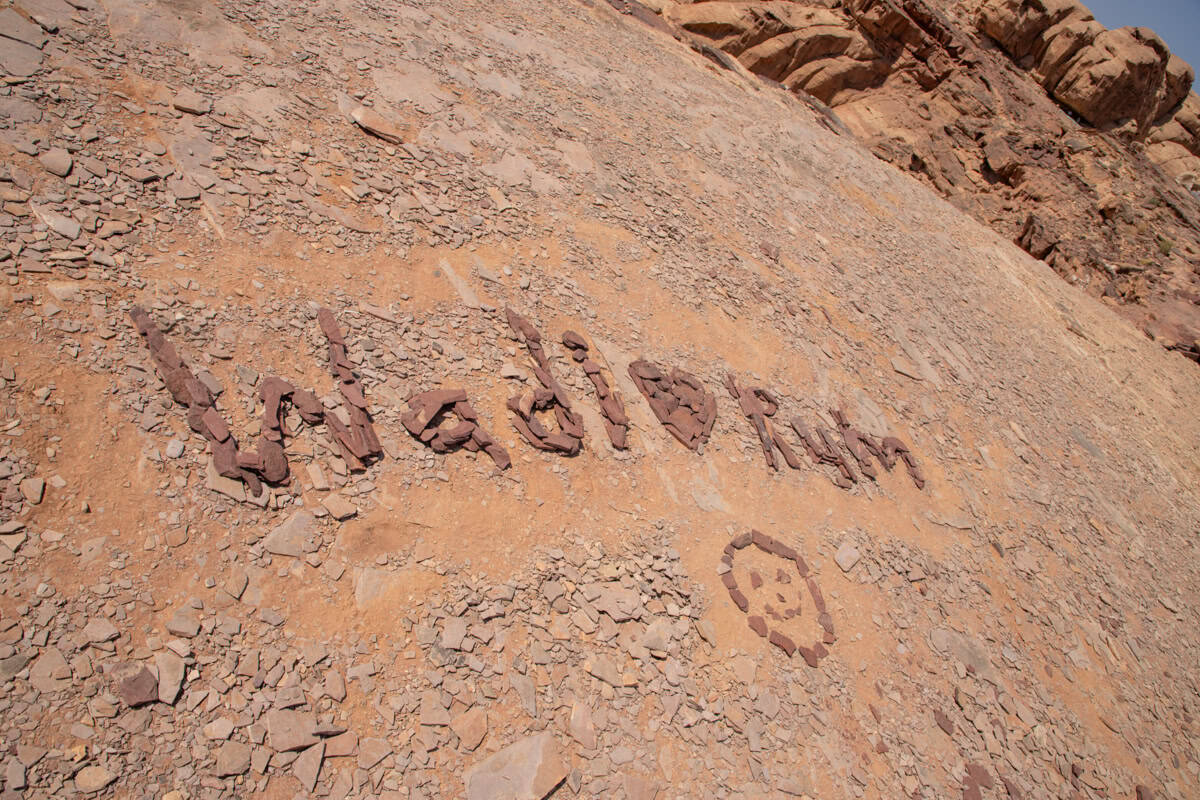
We went to the Wadi Sabet viewpoint, in the South of the Wadi Rum Protected Area, which gave us views out towards Saudi Arabia.
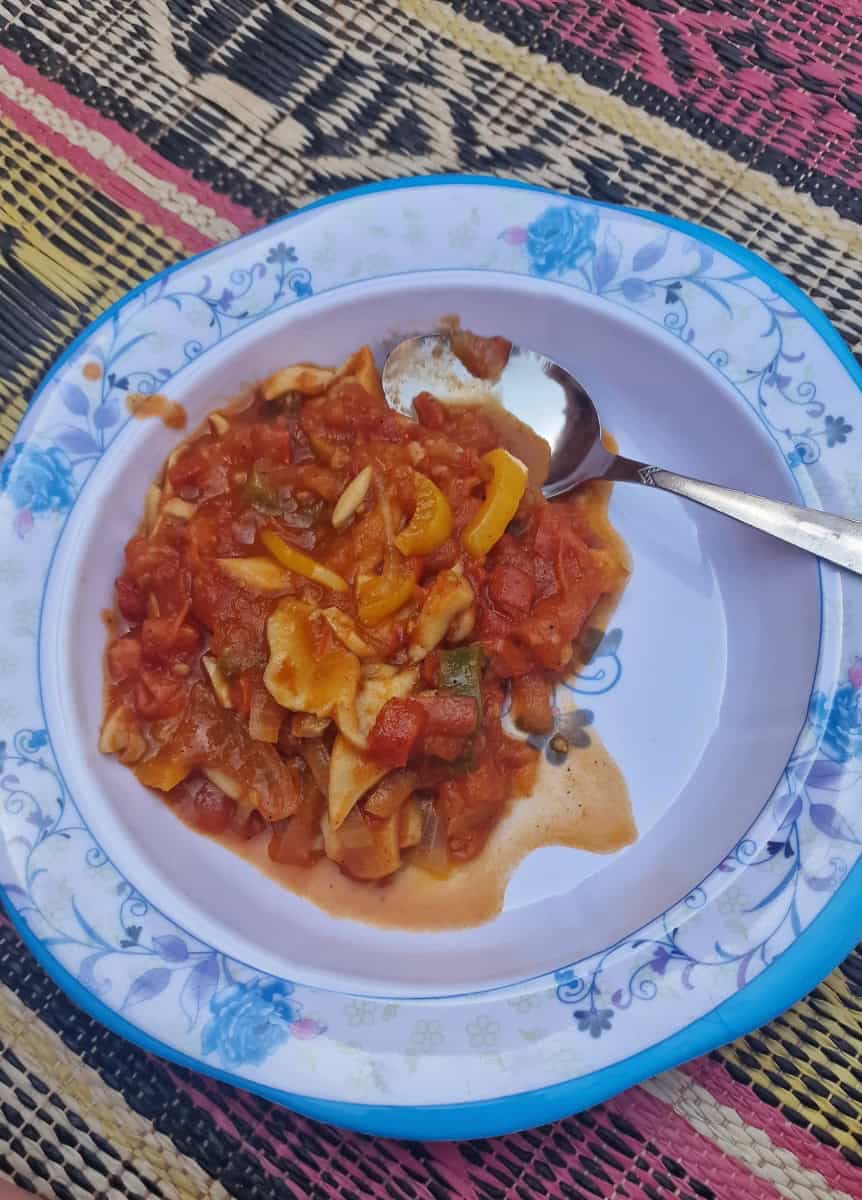
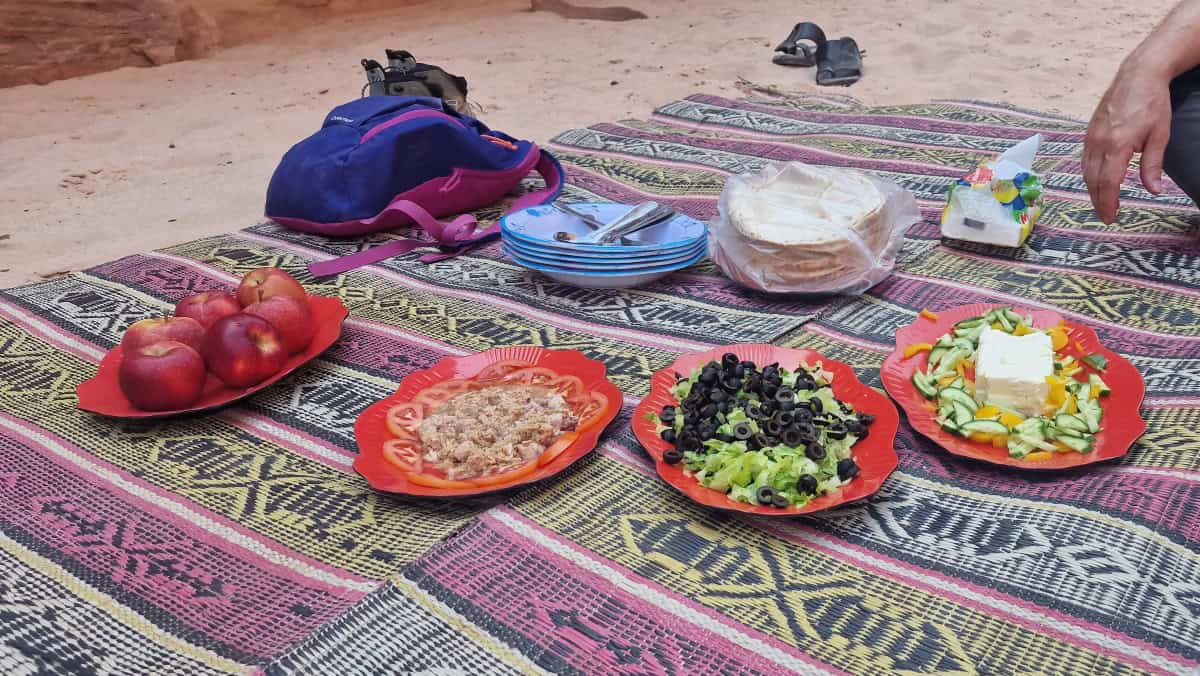
Like the previous day, we stopped for lunch in a shady canyon. We ate galayeh with mushrooms served alongside bread, tuna, tomatoes, lettuce, olives, cheese, cucumber and peppers.
Once again, after eating, the group settled down for a nap, while I wrote my notes for this very blog post.
Our next stop was at a mountain which me and Hayden climbed some of the way up while our newfound friends, Mark and Leeanne climbed all the way to the top.
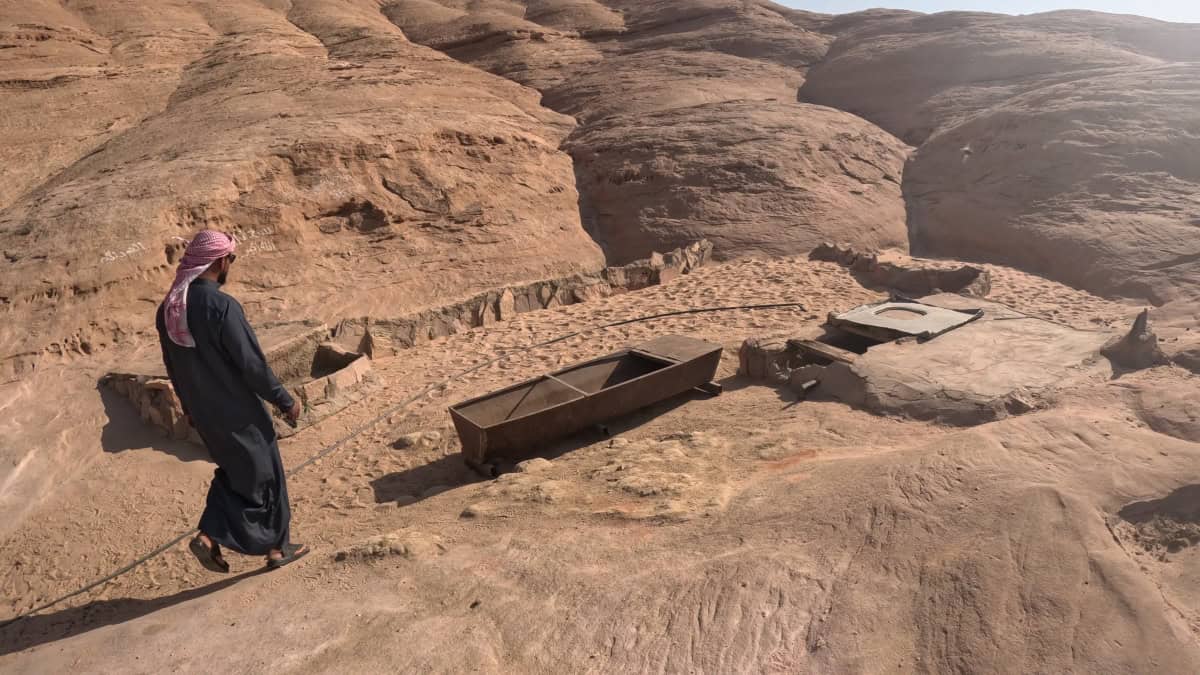
Rather interestingly at the base of this mountain was a well, which collects rainwater, I honestly didn’t expect to see any in the desert.
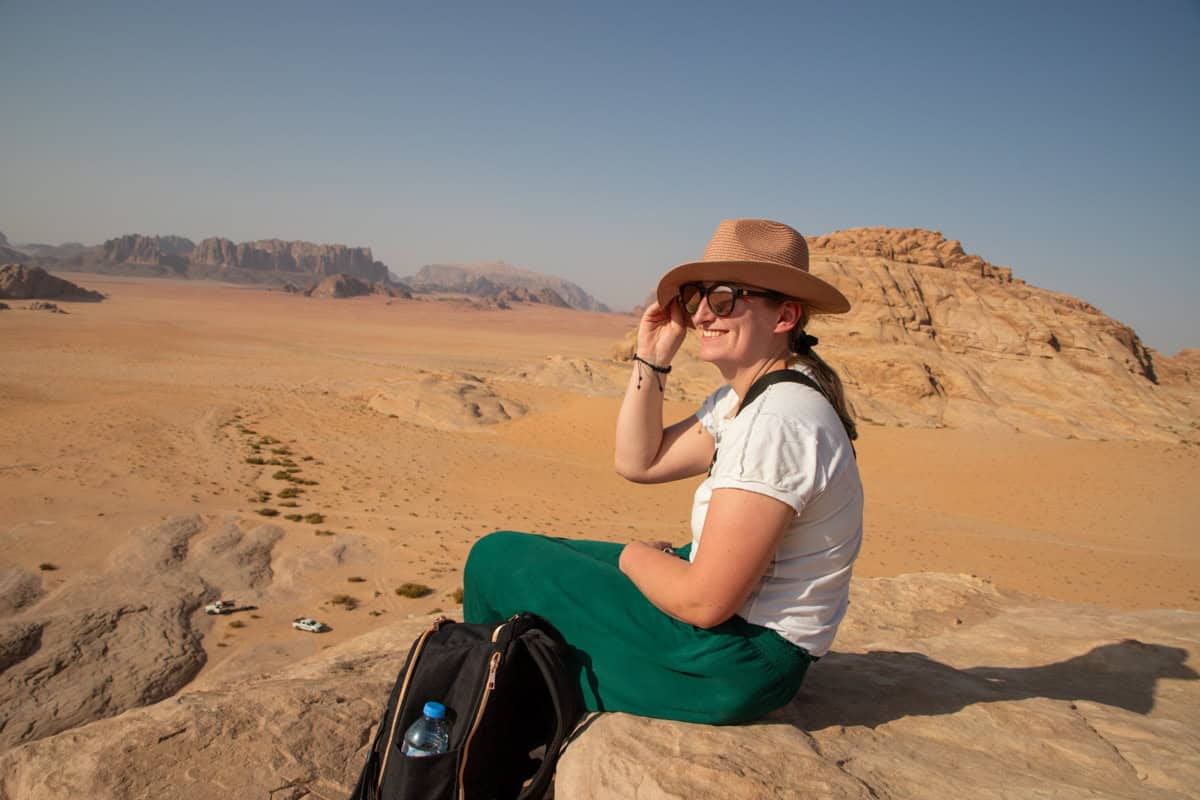
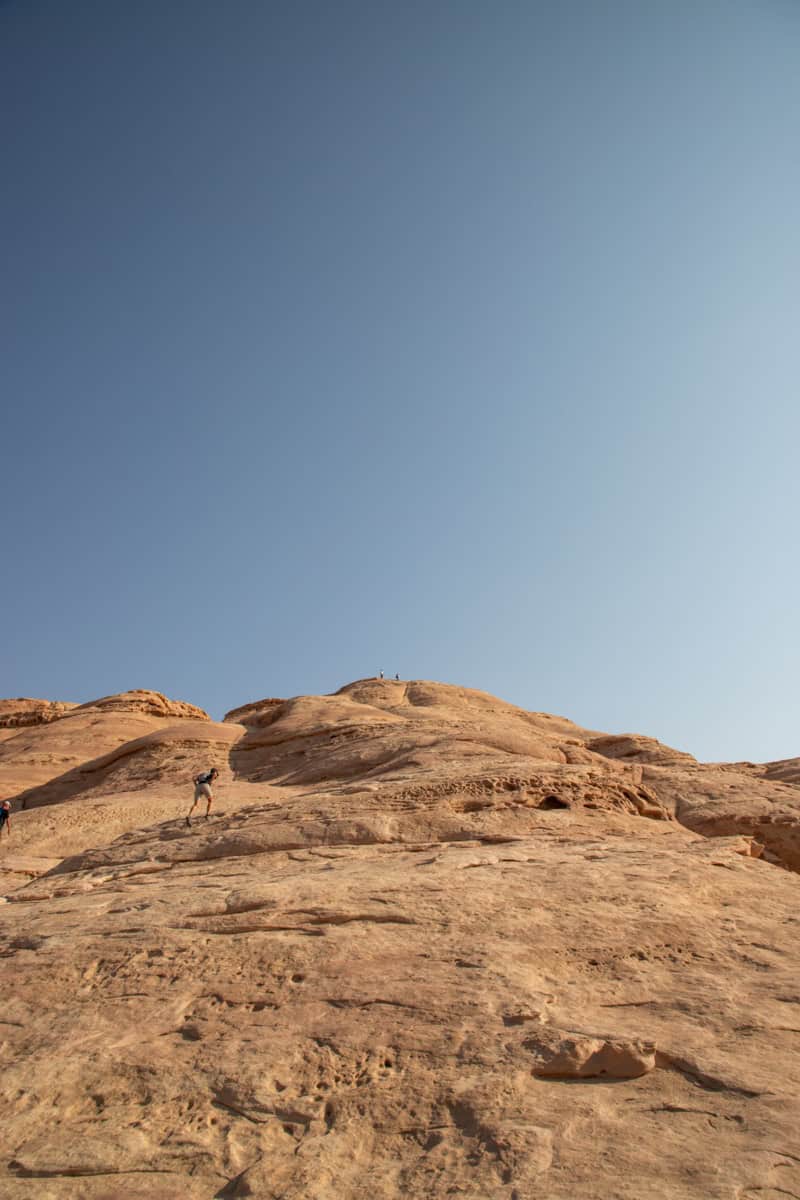
For our last stop, we walked through another canyon, before finding a good vantage point from which to watch the sunset with some Bedouin tea.
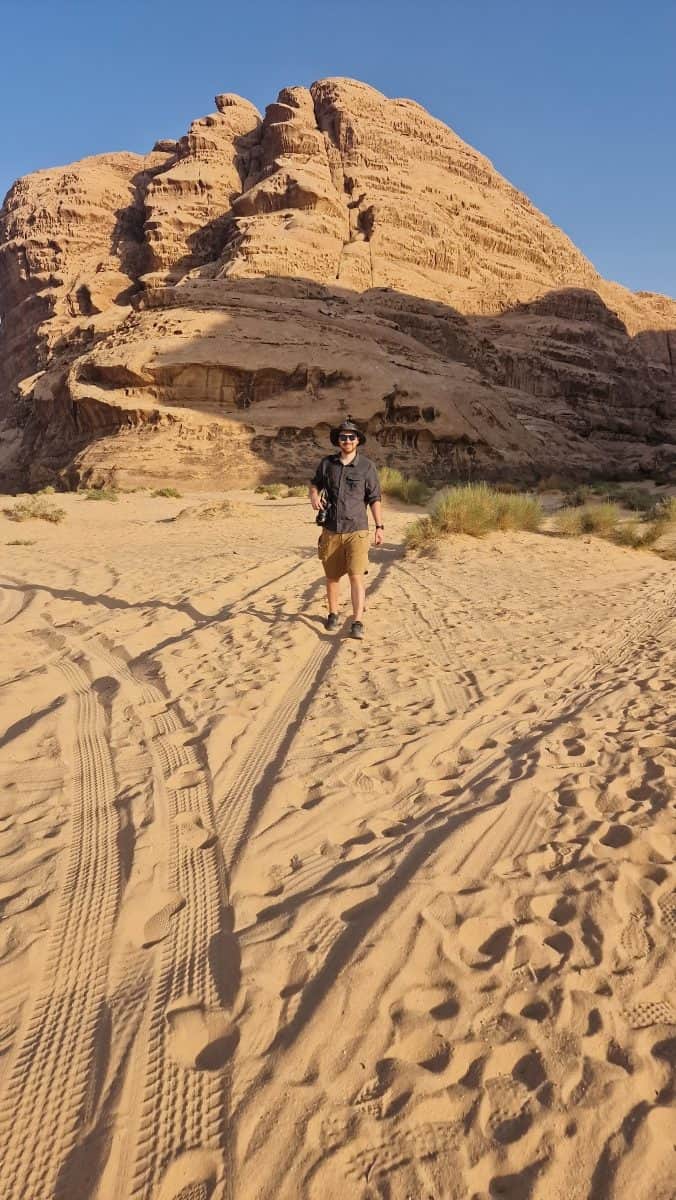
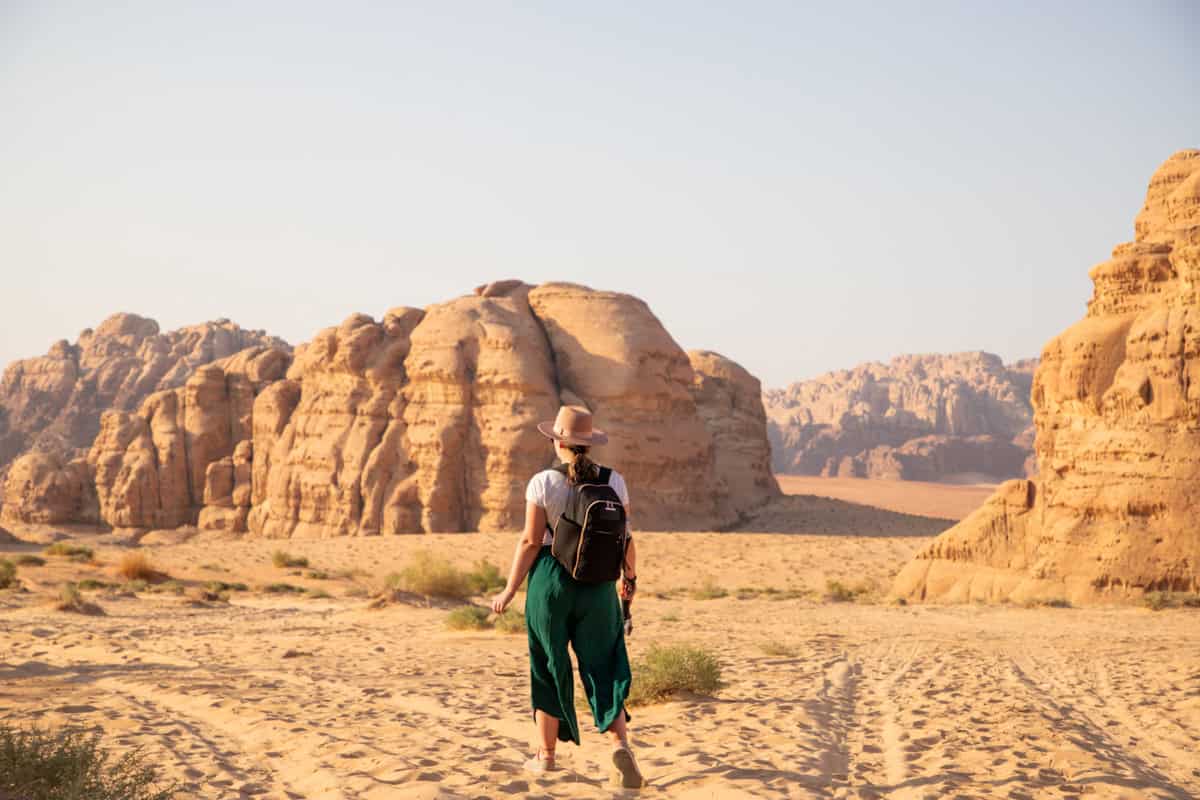
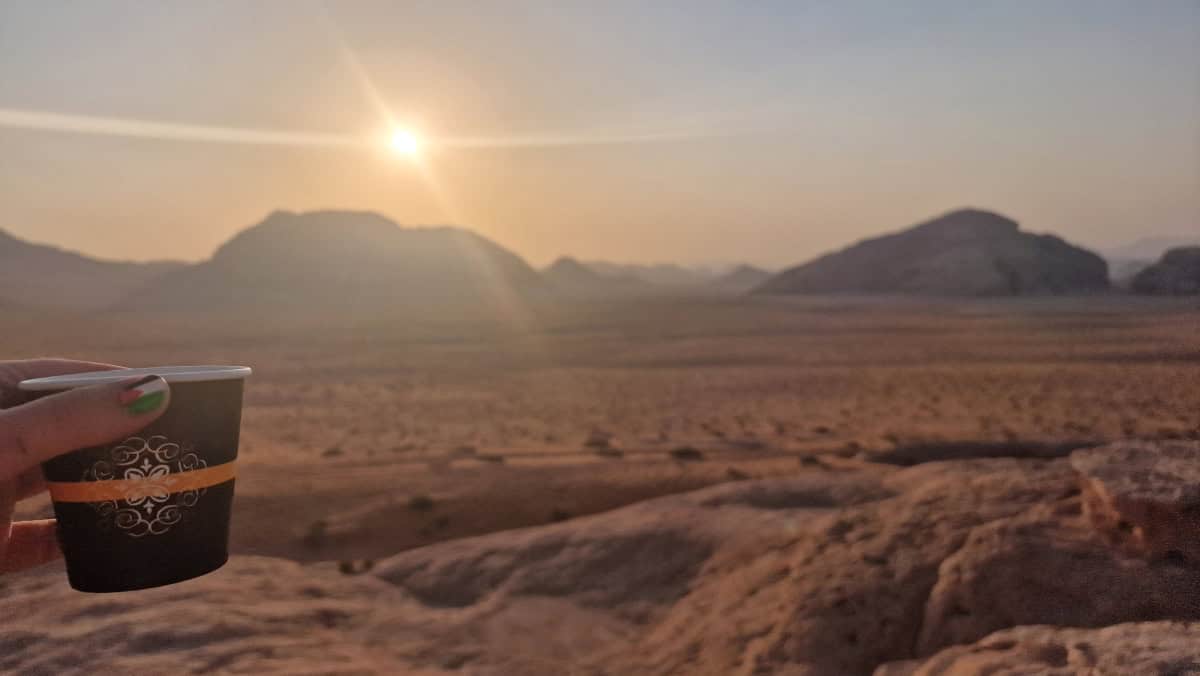
After that, it was time to head back to the camp to grab showers and eat dinner.
Day Three
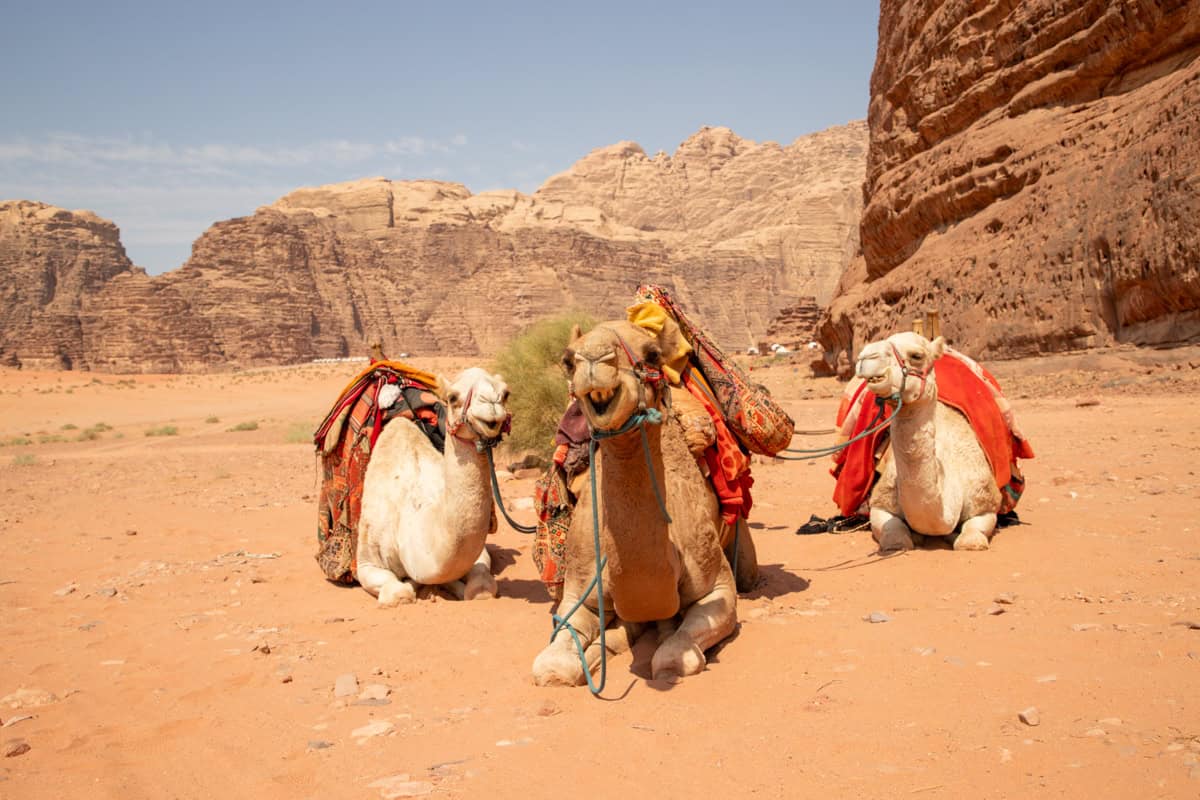
For our third day, we opted for a half day camel tour. We set off on our camels with our guide and Mark and Leeanne, to drop them off at the Wadi Rum village, before we embarked on our tour.
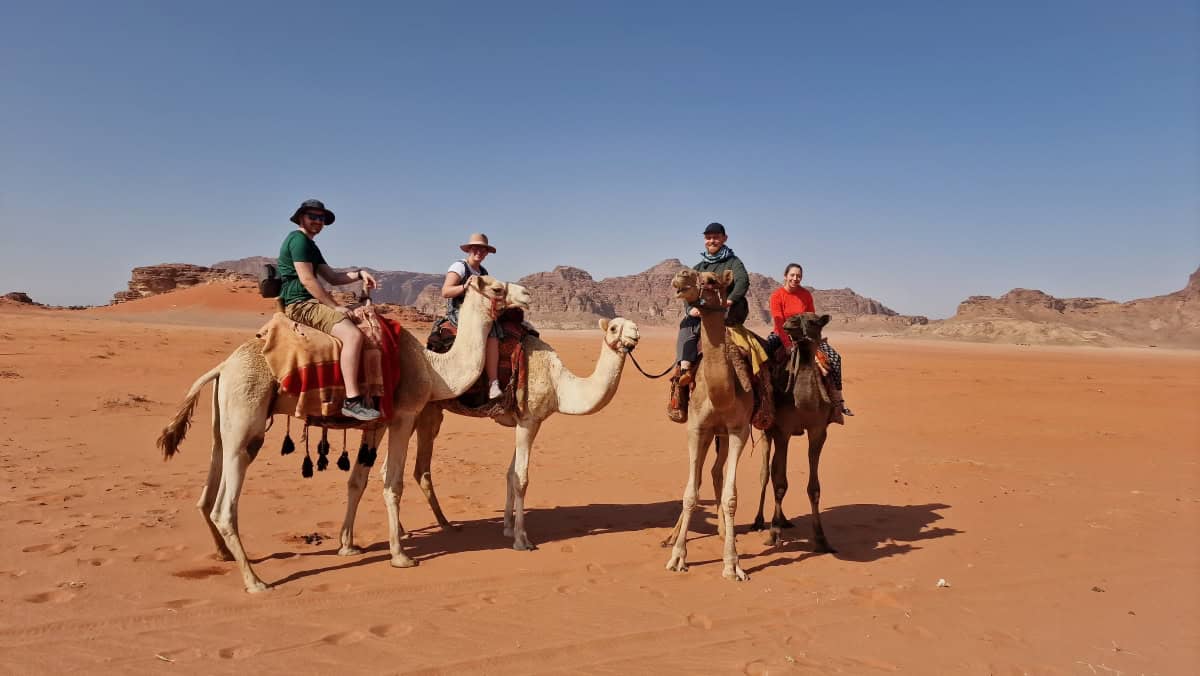
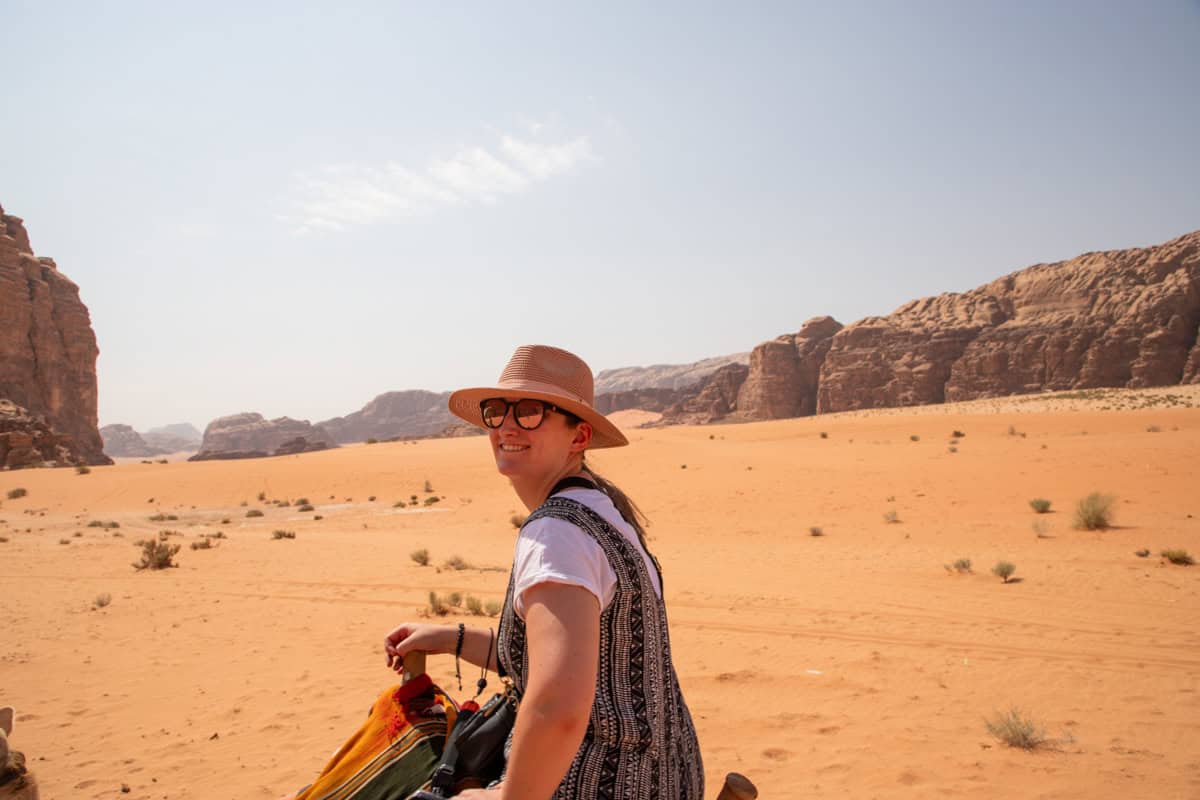
Honestly, the two hours to get to the village would have been enough, but we weren’t to know, and so we had an additional three hours of bouncing and jostling and sweating away.
With how long it takes to get anywhere by camel, we didn’t make that many stops but it was quite a nice way to see some quieter areas of the desert.
We walked up a sand dune, and rested for a little bit, we were shown more petroglyphs, and we rode past a number of either abandoned or half-built camps.
Like the previous two days, we had lunch, but this time we had individual packed lunches which contained bread, a tin of tuna, a cucumber, a tomato, an apple, a banana, a carton of hummus, cheese triangles, a fake Twinkie, a chocolate wafer, and a juice box.
We had a much shorter break that day, which meant we set off back out into the heat, and it was SCORCHING.
Overall, an interesting experience, but I would not recommend a whole half day atop a camel, it was rather painful!
Since we were only out for a half day, we were the only ones at camp when we got back (apart from some staff), but it was so nice to just relax on our little terrace swing. But as soon as the power went on, you best believe we raced for the shower to clean off all the sand and sweat from the day.
Food in the Desert
Obviously I’ve mentioned the lunch situation up above, but I’ll just do a quick look at breakfast and dinner.
Breakfast was a buffet style and you could get fresh omelettes (which were delicious) as well as bread, cheese triangles, some kind of meat (we still don’t know what it was), and some fruit and veg.
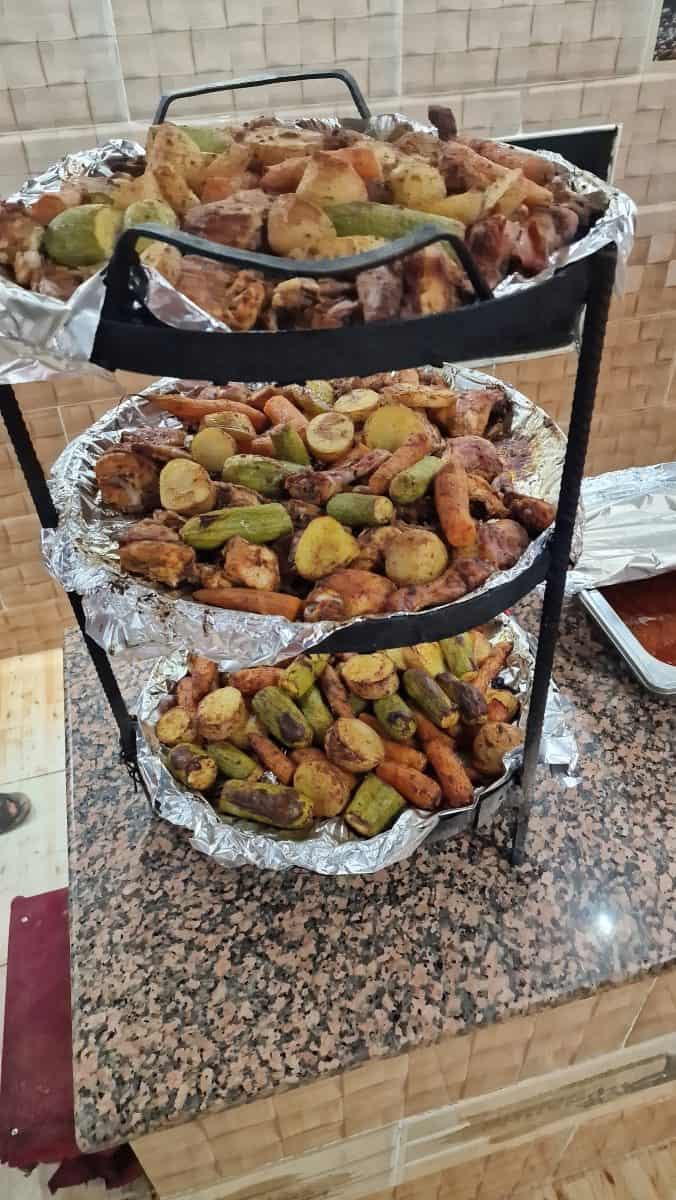
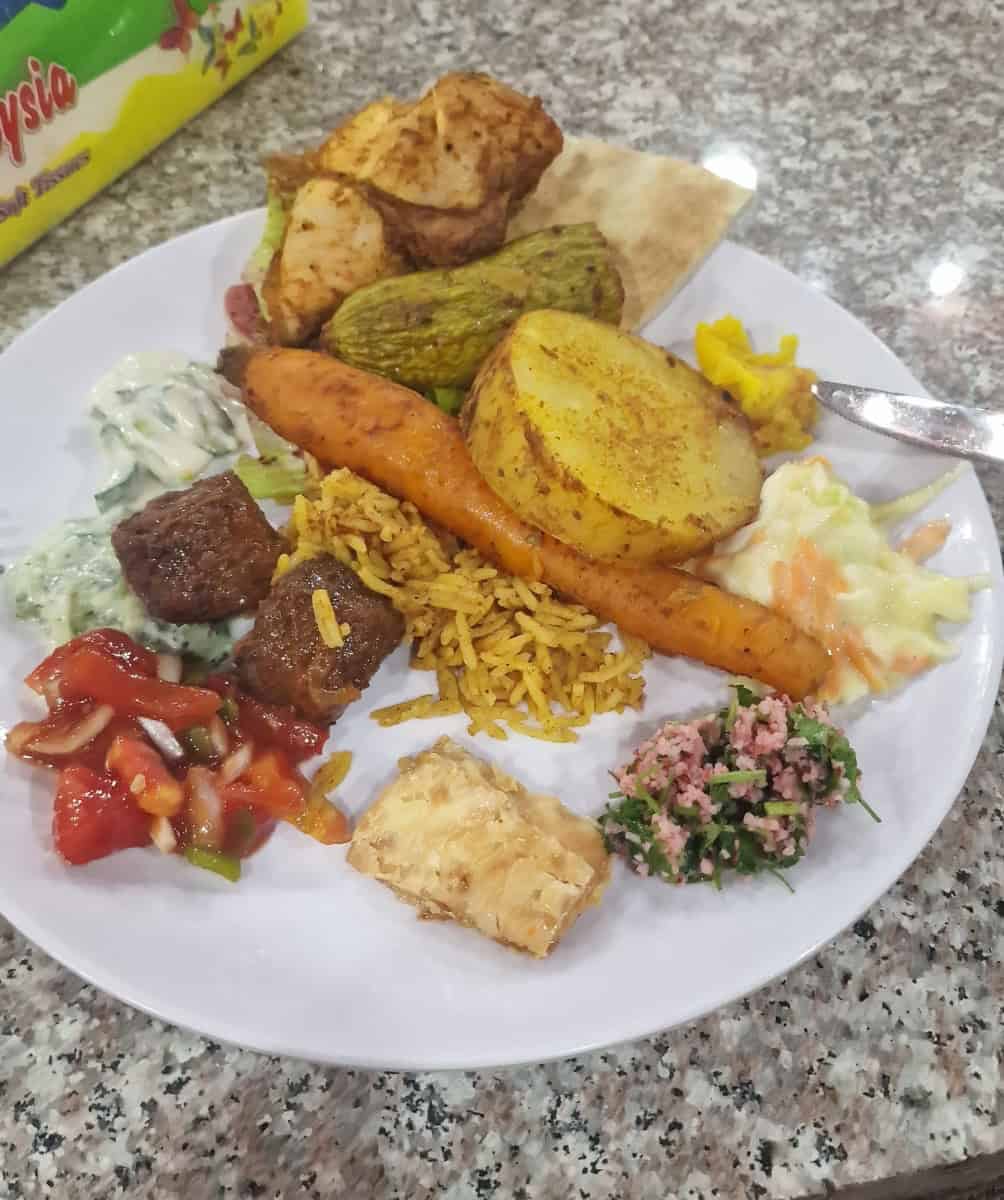
For dinner, the main focus was zarb. Zarb is a traditional way of cooking, which involves burying a rack of food in an underground pit with a fire underneath and allowing it to cook for several hours. We had chicken, potatoes and vegetables, and they were all so tender, and had a lovely smoky flavour.
There were also other things such as meatballs, rice, salads, etc. which provided a good variety and there was always plenty of food.
Nights in the Desert
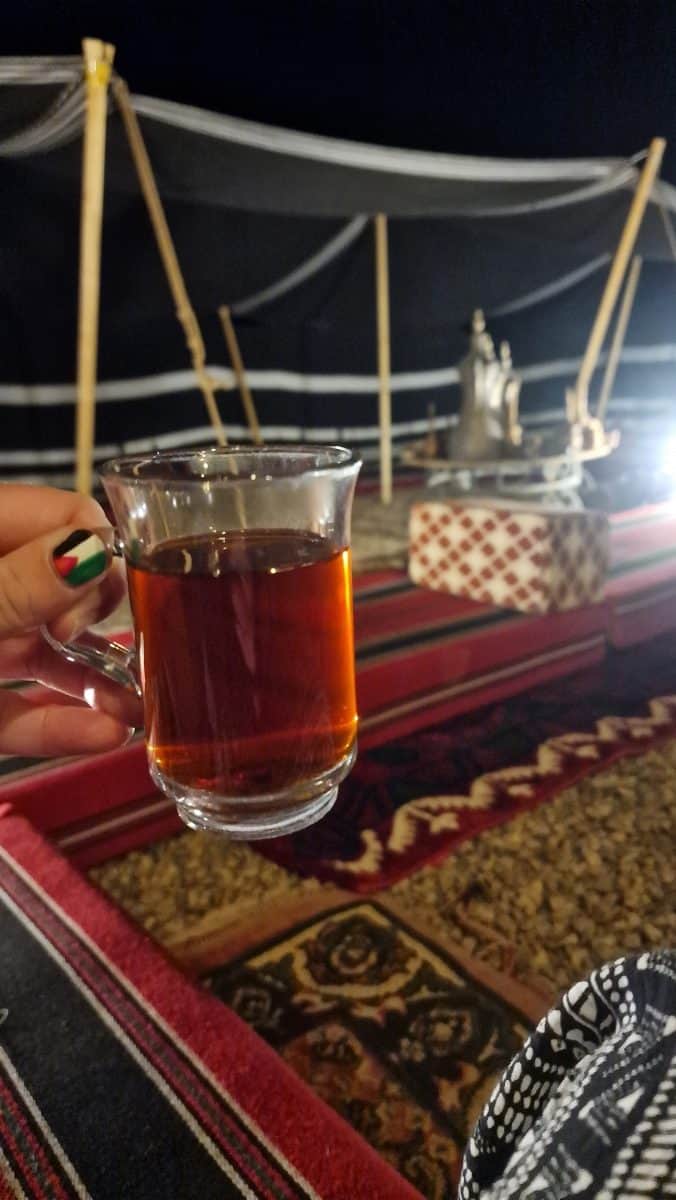
After dinner each night, we gathered around a fire with Bedouin tea and listened to some local music. There was dancing on our first two nights, but I think it all comes down to how many people there are, as on our third night, there were fewer people, and so it seemed a bit more chilled, we were exhausted anyways so had an early night.
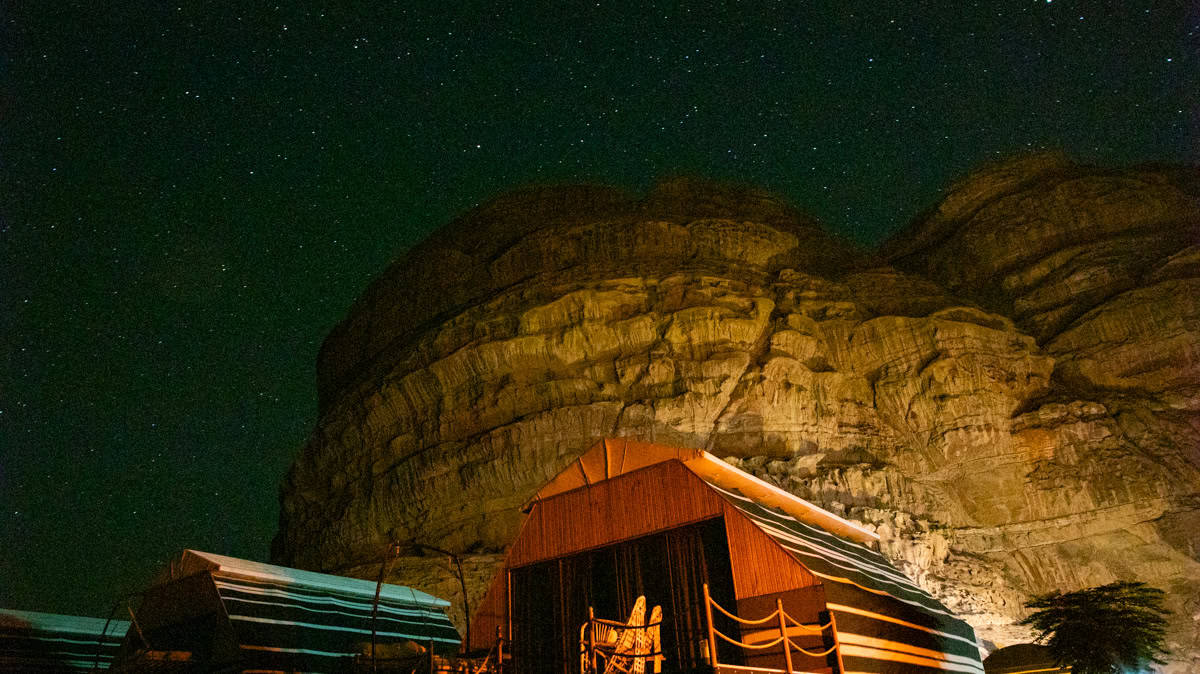
On our second night, we actually tried our luck with night sky photography. Unfortunately, it didn’t turn out the best as we were competing with the lights of the campsite but it was still quite a nice experience.
Conclusion
How Long Should I Stay?
We stayed three nights, was that too long? I believe it was. We could and should have stayed two nights and taken the two hour camel ride back to the village as opposed to opting for the five hour camel ride and an extra night. As I always say, it all depends on what you want to get from the experience. Just communicate with your guide about what you want and they can make recommendations.
What Should I Do?
There is much to keep you occupied in the desert, from jeep tours of the most popular sights, to camel rides, and even hot air balloon rides. I hope that this post helps you work out what you need to know, although, if you have any further questions, you are more than welcome to comment below, or you can head to the Contact Us page.
