


Dutch cuisine often gets overlooked, but it’s full of comforting bites, quirky flavours, and plenty of cheese. From sweet to savoury, here’s what I ate while in the Netherlands, and what I honestly thought of it all.
Poffertjes
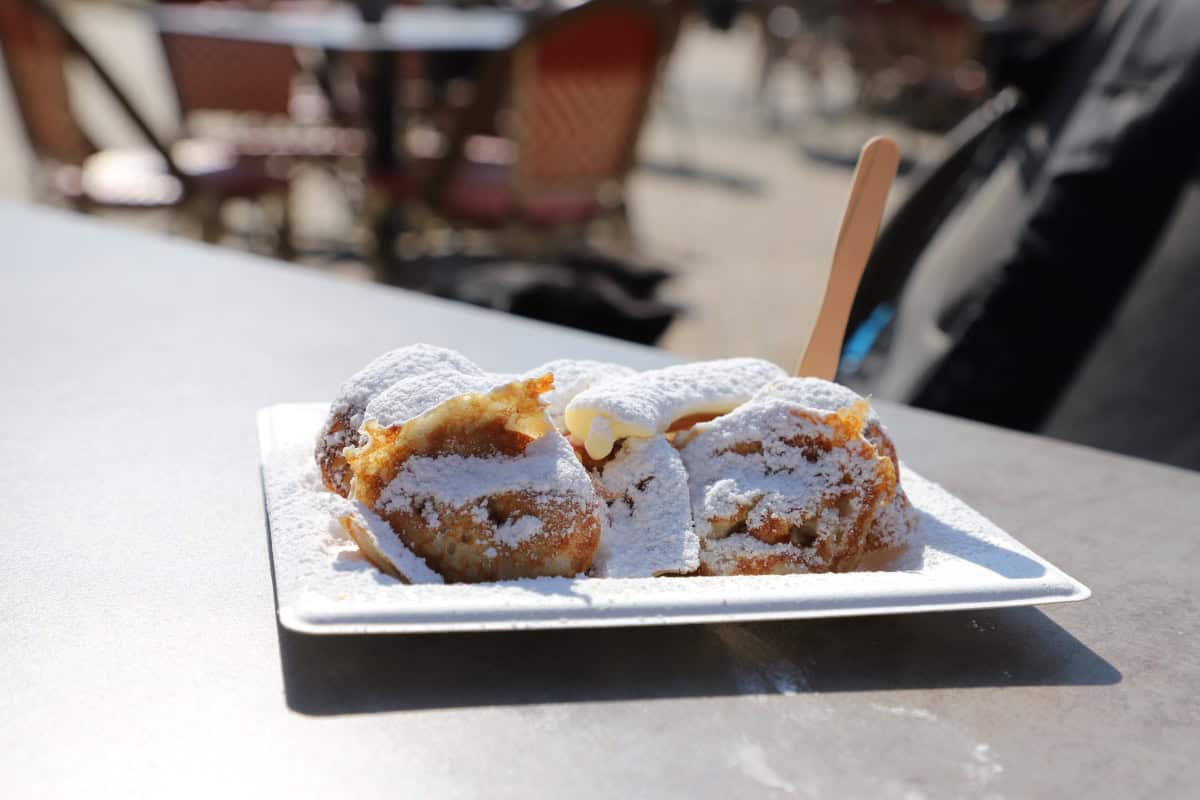
If the Netherlands had a comfort food mascot, it would probably be poffertjes. These little pillowy pancakes are usually piled high with butter and icing sugar, making them as messy as they are delicious. They may be bite-sized, but they pack a nostalgic punch for locals and a fun “must-try” for visitors.
History
Poffertjes are believed to have originated in the 18th-century Netherlands, where monasteries made these little pancakes and served them as communion bread, which honestly sounds like a much better idea than the usual communion wafers!
From there, these mini pancakes gained popularity and became popular at markets and fairs.
Where to Try

You’ll find poffertjes at seasonal markets, food stalls, and some cafes.
I tried these fluffy delights at the Netherlands Open Air Museum (Openluchtmuseum), at the poffertjes stall in the village (Dorp) region. I even got to watch them being made in the traditional cast-iron pan, which made them feel extra authentic.
My Thoughts
There was a lot of butter, and I got icing sugar everywhere, but they were worth the mess. Sweet, fluffy, and indulgent, I would definitely order them again.
Herring (Haring)
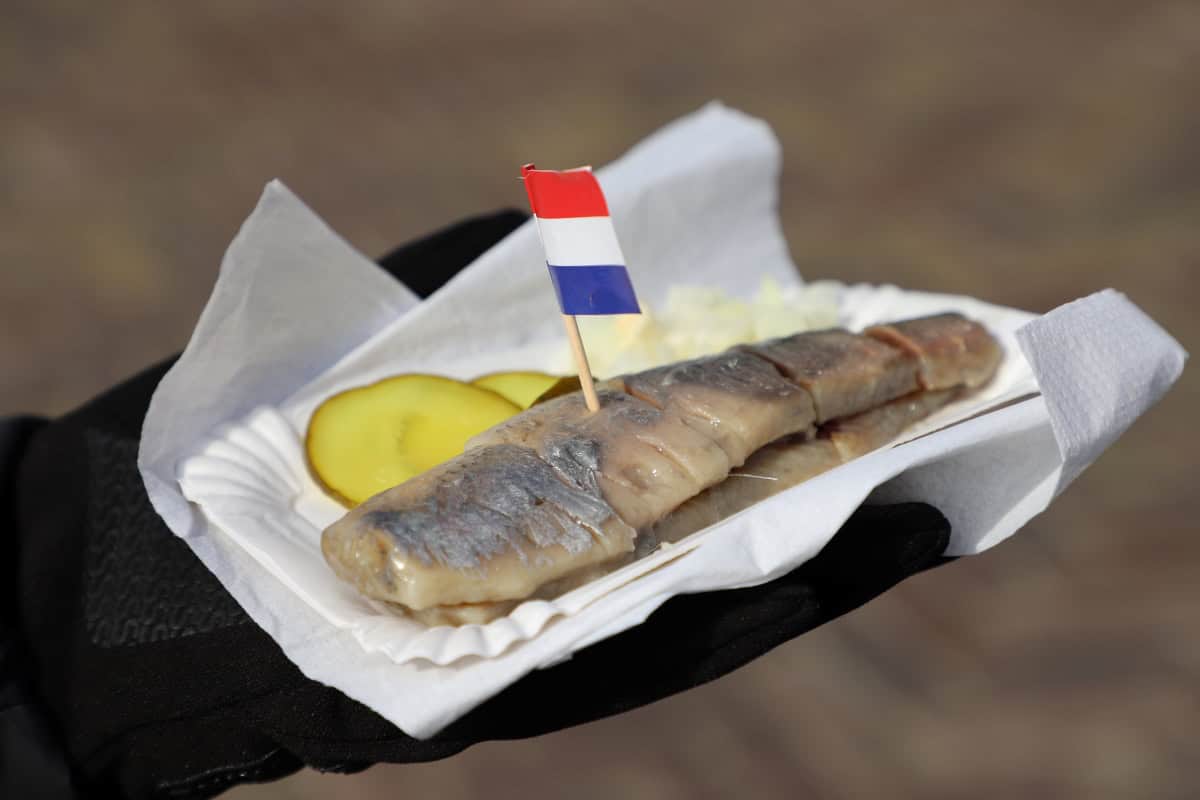
Raw herring is one of the most famous Dutch delicacies, often eaten with raw onion and sometimes pickles. It’s been part of the Dutch diet since the Middle Ages, when preserving fish in salt was vital for survival, and today it’s still served fresh from street stalls across the country.
History
While herring has been part of Dutch cuisine since the Middle Ages, it wasn’t until a Dutch fisherman, Willem Beukelszoon, developed the process of “gibbing” (which helped to preserve the fish for longer), that the Dutch became a leader in the Europe herring trade.
Where to Try
You’ll find herring stalls all over the Netherlands, but fishing villages like Volendam and coastal cities such as Rotterdam and The Hague are particularly popular spots. Traditionally, locals eat it by holding the fish by the tail and lowering it into their mouth. However, most stalls will chop it into chunks for a slightly less intimidating experience. I had mine from a stall in Volendam, chopped into chunks with onion and pickle.
My Thoughts
The pickles were delicious! But as for the fish itself, I think my face says it all…
The flavour was incredibly fishy (yes, I know), and the slightly slimy texture didn’t help either.
I normally love seafood (cooked, that is), but one bite was enough to convince me that herring is a once-in-a-lifetime experience I won’t be repeating.

Bitterballen
Crispy on the outside, soft and savoury on the inside, I think bitterballen are the ultimate Dutch bar snack, or bitterfarnituur.
Bittergarnituur are a collection of savoury snacks, often served in Dutch pubs, with the most popular bittergarnituur being the bitterballen.

History
Bitterballen are thought to have originated with the Batavi, an ancient Germanic tribe in what’s now the Netherlands, who combined leftover ox meat, vegetables, and bread into hearty meals for hunters.
Bitterballen evolved during the 16th-century Eighty Years’ War, when the Spanish introduced breadcrumbing and egg-wash techniques, which turned the humble leftover stew into a crispy bar snack.
Where to Try
You’ll find bitterballen on the menu in most cafes, bars, and restaurants, particularly on drink menus. I had mine at De Taanketel in Marken, a restaurant on the water’s edge.
My Thoughts
I absolutely loved these! The outside was golden and crisp, while the inside was creamy and savoury – though I couldn’t tell you exactly what the filling was. Paired with mustard, they were addictive and easily one of my favourite Dutch foods. I even dunked one in Hayden’s mustard soup; it was absolutely scrumptious!
Cheese
I feel like cheese is an absolute must in the Netherlands. The country produces over 650 million kilograms annually, which is absolutely mind-blowing. You’ll find entire shops dedicated to cheesy goodness. I wasn’t complaining, though; I’m always happy to sample my way through a few flavours.

History
Cheese production in the Netherlands is said to date back as far as 80 BCE, with Julius Caesar’s book, Bellum Gallicum, mentioning it. Over the centuries, Dutch cheesemakers refined their craft, with cheese being produced on dairy farms until the 19th Century. If you want to see traditional production methods in action, Dutch Holland recommends visiting the Dutch Cheese Museum in Alkmaar.
Where to Try
Okay, the recommendations have to be for places like Gouda and Edam, yet we didn’t visit those towns. Instead, I frequented the Henri Willig shops in Delft and Volendam, picking up samples along the way. One of the staff members in the Volendam shop even popped outside to give Lucy some samples!
My Thoughts
I love cheese, I could have happily bought every flavour going, but we were working with limited fridge space, so the solution was a young Gouda and a smoked cheese. The smoked cheese went perfectly with some fajita-loaded fries I made on the road!
Honourable Mentions
I did try a few other things than those mentioned above, but I either didn’t try “proper” versions of them, or I didn’t get a picture of them, so here are the honourable mentions:
Frikandelbroodje: I got one of these from a supermarket bakery on the walk from Zaandam to Zaanse Schans. It’s a sausage wrapped in puff pastry, not quite a Greggs sausage roll, but a handy on-the-go snack.
Stroopwafels: The famous thin waffle biscuits with a caramel-like syrup filling. I picked a packet up from Henri Willig (as they were egg-free for Hayden). They were sweet and syrupy, nice, but not quite the freshly made magic you hear about at markets.
Appelflap: A favourite for Hayden, mostly because it was one of the few sweet treats he could enjoy from the Aldi bakery aisle. It’s puff pastry filled with apple, sugar, and sometimes raisins or cinnamon. Simple, tasty, and a classic Dutch treat.
Brownie: Of course, I had to try a special brownie from Amsterdam. I opted for a vegan brownie from Abraxas in Amsterdam. Not really my cup of tea, but the staff were super friendly and informative.
What I’d Try Next Time
Unfortunately, I didn’t get to try everything that I wanted to, but that just means I have more reasons to return to the Netherlands!
So, what did I miss that you can try on your trip?
- Stampot
- Hachee
- Erwtensoep
- Oliebollen
Conclusion
The Netherlands might be small, but its food scene is big on flavour, from sweet poffertjes to crispy bitterballen, salty herring, and world-famous cheese. Travelling in our campervan meant we cooked a fair bit ourselves, so we didn’t get to try every traditional main meal dish, but what we did taste gave a real flavour of Dutch culinary culture.
Whether you’re wandering markets, stopping by street stalls, or visiting iconic cheese shops, there’s something delicious around every corner. And even if a few bites weren’t exactly your cup of tea (or fish of the sea), the experience of trying it all makes it worth it.
Have you tried any Dutch dishes? Let me know what I should add to my list.
Not been to the Netherlands yet? Which Dutch dishes would you most like to try?
References
Poffertjes – https://candy-buffets.co.uk/the-origin-of-mini-dutch-pancakes-story-behind-the-treat/
Herring – https://accessibletravel.nl/herring-tradition-the-story-of-hollandse-nieuwe/#:~:text=The%20history%20of%20herring%20in,herring%20was%20handled%20and%20preserved.
Bitterballen – https://zachandalison.com/blogs/netherlands/bitterballen?srsltid=AfmBOooD_WZI5ONraqchSeIYZF5kxBdnqGntFrs5DLjs-uSyPF7PebDO#history
Cheese – https://www.discoverholland.com/best-of-holland/27/cheese
