


As a supplement to our Week in Krakow post, I have written a post to capture the food we tried, some of its history, our thoughts on it, and where we tried it.
Pączki
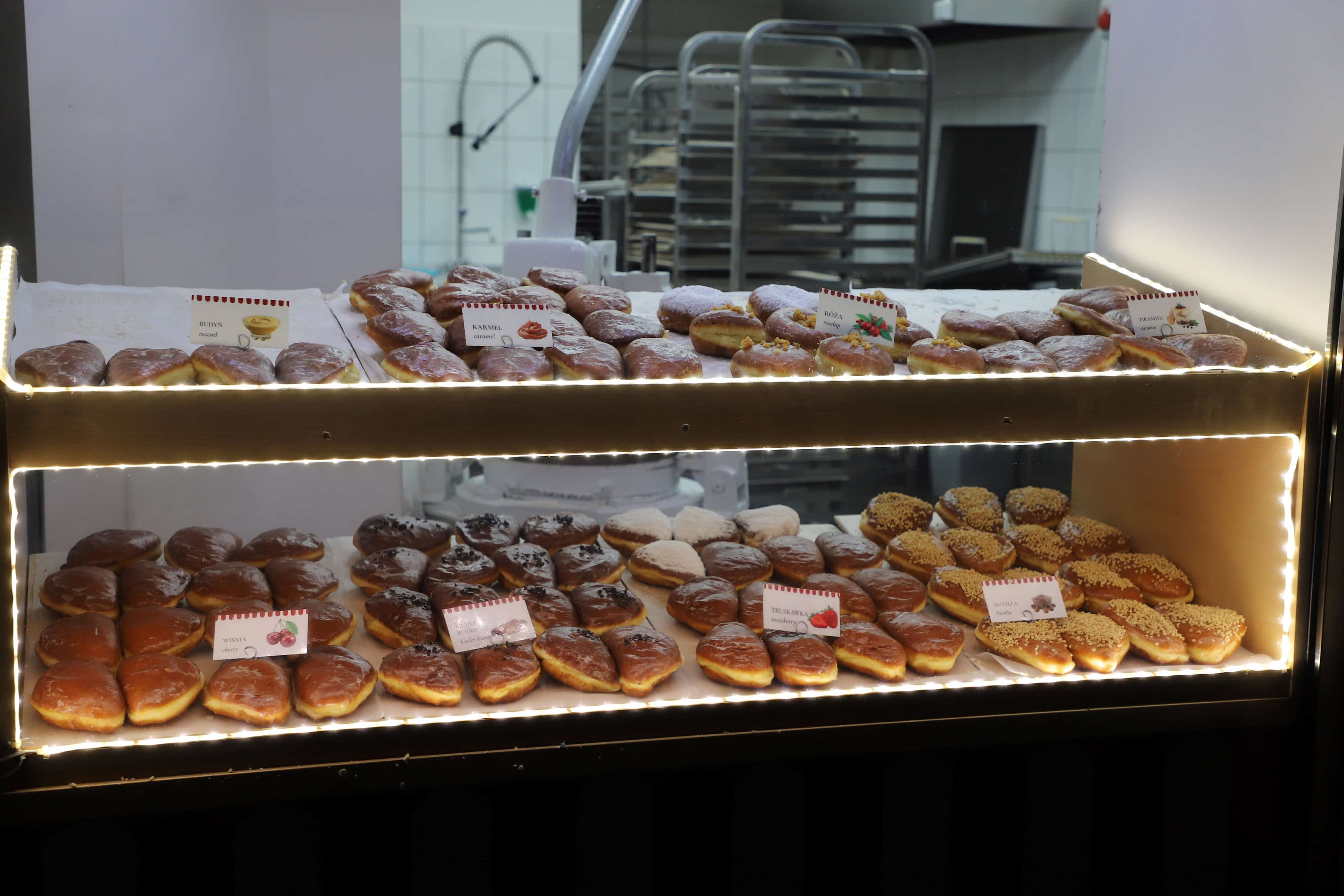
Pączki are glorious. They are essentially filled doughnuts and they come in an array of flavours. My mouth is honestly watering just thinking about these bad boys. I mean, just look at them!
History
One of the best things I’ve learned while reading up on pączki is the phenomenon of ‘Fat Thursday’. Basically, on the Thursday before Ash Wednesday and the start of Lent, Poles will eat as many doughnuts as possible, all in the name of good luck, and that is a tradition I can happily get behind!
In terms of history, pączki have been around in Poland since the 16th century, but these were originally known as kreple. The recipe has changed over the years, until eventually reaching the fluffy fried deliciousness found in Polish pastry shops today.
Where to Try
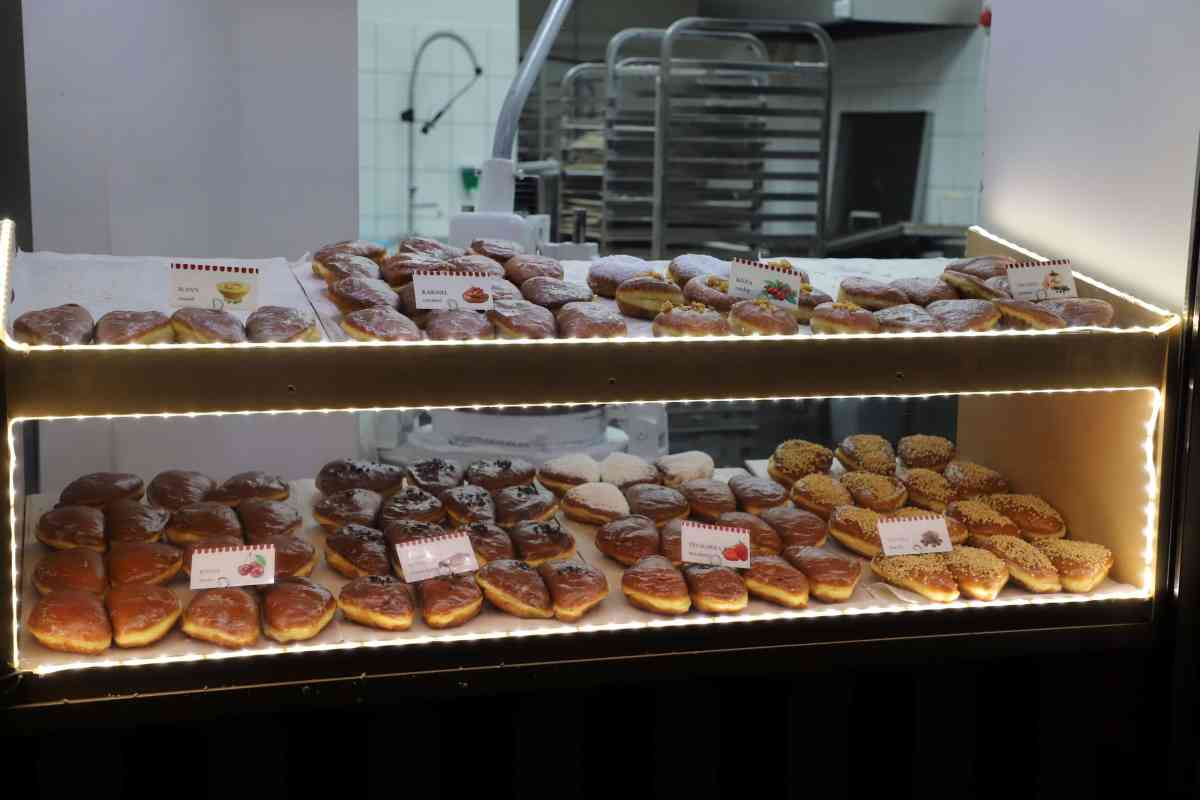
We picked up our pączki from Pączkarnia on Grodska, a street known for its historic churches and palaces. Just look at that window display in the photo above! And if you’re looking for more options, you’ll find several other shops with similar displays along the same street we visited, at least two more!
Our Thoughts
Love love love! I’d honestly return to Krakow just for these, the range of flavours are simply incredible!
Obwarzanki
We got this bread from one of the many blue food carts you will see as you explore Krakow. It’s a braided parboiled ring of dough which is generously sprinkled with salt and poppy or sesame seeds.
History
An almost bagel-pretzel hybrid, this bread has an interesting history.
The history of obwarzanek krakowski dates back to the late 14th century, deriving its name from the distinctive parboiling process, known as “obwarzać.” Bakers traditionally made them, baking the treats during Lent and selling them within Krakow’s city walls. The bakers’ guild was established in the 13th century to regulate production, with sales occurring at bakery stalls around the Sukiennice. By the mid-19th century, any baker could make them.
In 2010, the obwarzanek was granted Protected Geographical Indication (PGI) status. Purchasing from a certified baker ensures authenticity, with strict adherence to weight, shape, and production processes.
Where to Try
As mentioned above, we got ours from one of the many blue food carts you will see as you explore Krakow. You’ll be able to find one on near enough every street.
You can also visit the Żywe Muzeum Obwarzanka, a museum where you can undertake a roughly one hour class and make your own obwarzanek krakowski! While we didn’t do this, it’s something I would absolutely love to do if we return to Krakow.
Our Thoughts
Honestly, the obwarzanek we had was pretty good, it tasted like a bagel-pretzel hybrid; would be fab with some cream cheese or something, but as a street food, to eat on the go, it worked perfectly.
Would we have it again? Absolutely!
Pierogi
Pierogi, once a humble and economical staple of Polish cuisine, now stand as a symbol of its culinary heritage. Filled with an array of sweet or savoury ingredients, they have earned a place in the hearts and stomachs of food lovers worldwide.
History
Pierogi are believed to have been enjoyed in Poland since the 13th century, with various legends surrounding their introduction to the country. One notable figure in these legends is St. Hyacinth, who is considered the patron saint of pierogi. As a result, the phrase “Święty Jacku z pierogami!” (St. Hyacinth with his pierogi!) is commonly used in Polish culture, often exclaimed in moments of annoyance.
Where to Try
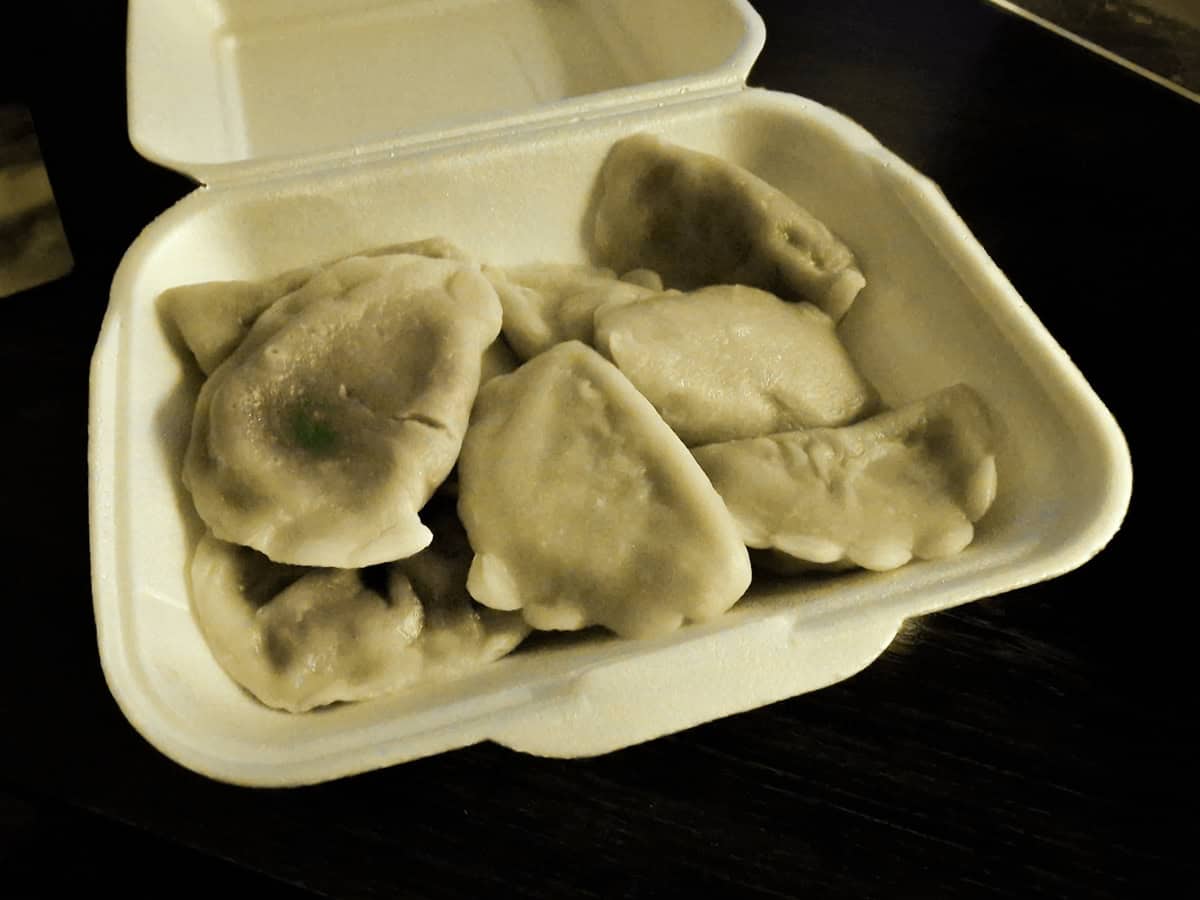
I opted for a sweet and savoury assortment from a food truck located in Judah Food Square. However, there are numerous specialty restaurants, known as pierogarnia, dedicated solely to perfecting this beloved dish.
Our Thoughts
To be honest, I wasn’t a huge fan of the pierogi; I think I should have stuck with a flavour I know I would have enjoyed, like potatoes and cream cheese. The sweet ones didn’t really appeal to me. I don’t think the fact that they were served in a polystyrene container helped; they ended up a bit sweaty while I was walking back to the pub we were at. Despite this, I’d definitely give them another try but I’d opt for a pierogarnia.
Zapiekanka
Zapiekanka, a cherished Polish street food, has earned a revered status among locals and visitors alike for its satisfying flavours and budget-friendly appeal.
While locals may enjoy this as a nostalgic treat, tourists definitely prioritise it at the top of their lists.
History
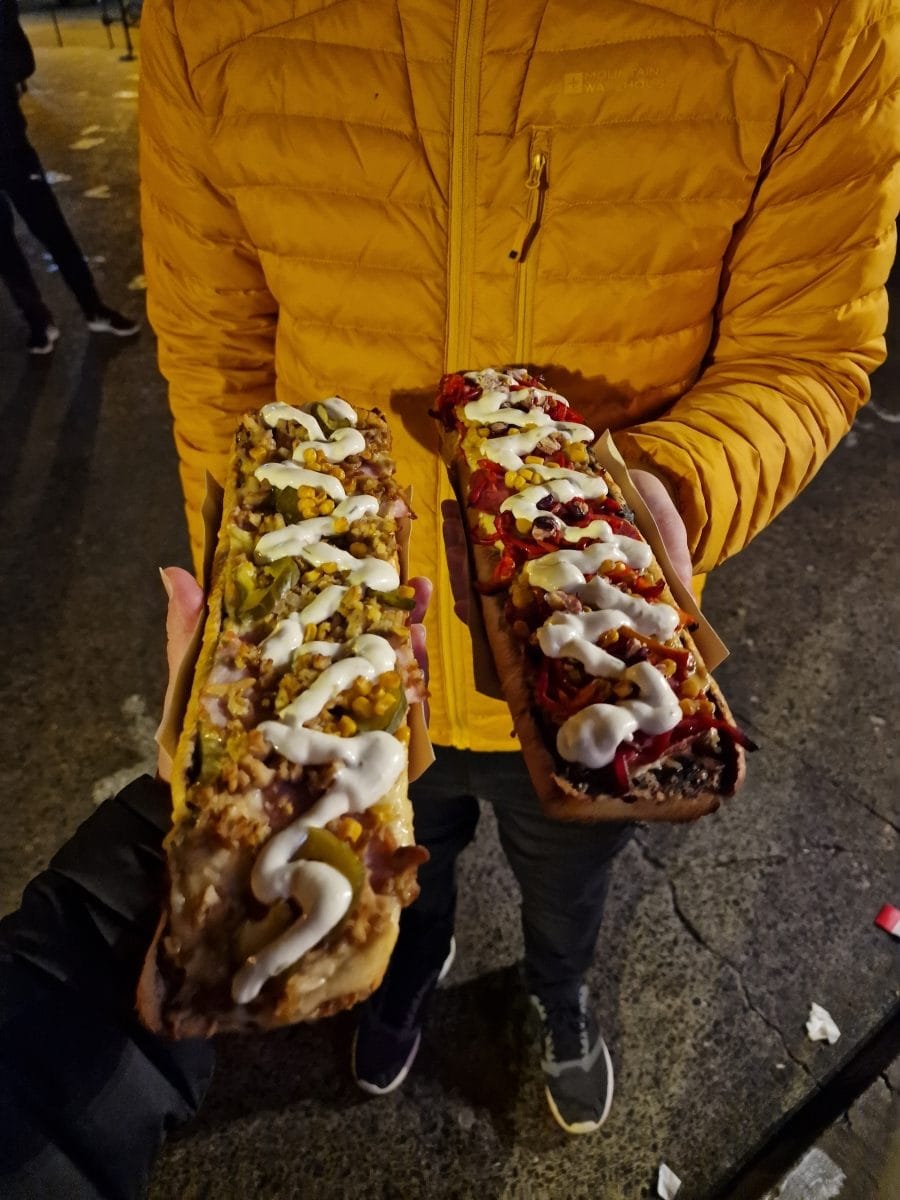
Emerging during Poland’s communist era in the 1970s, zapiekanka served as a simple meal option when meat was scarce. Originally consisting of a baguette topped with mushrooms and cheese, grilled to perfection, and served with a drizzle of ketchup, zapiekanka demonstrated resourcefulness amid limited ingredients.
Where to Try
We went to the Okraglak in Kazimierz to try the renowned zapiekanka. Many stalls offer zapiekanka here, and you can find even more places scattered throughout the city serving this dish.
Our Thoughts
Well Hayden isn’t the biggest fan of mushrooms, so this maybe wasn’t the ideal dish for him. I loved the crunch of the baguette contrasted with the juiciness of the mushrooms and combined with the plethora of other toppings, it was a culinary treat. Although, they are pretty big, so you could always get away with sharing one if you’re unsure!
Maczanka po Krakowsku
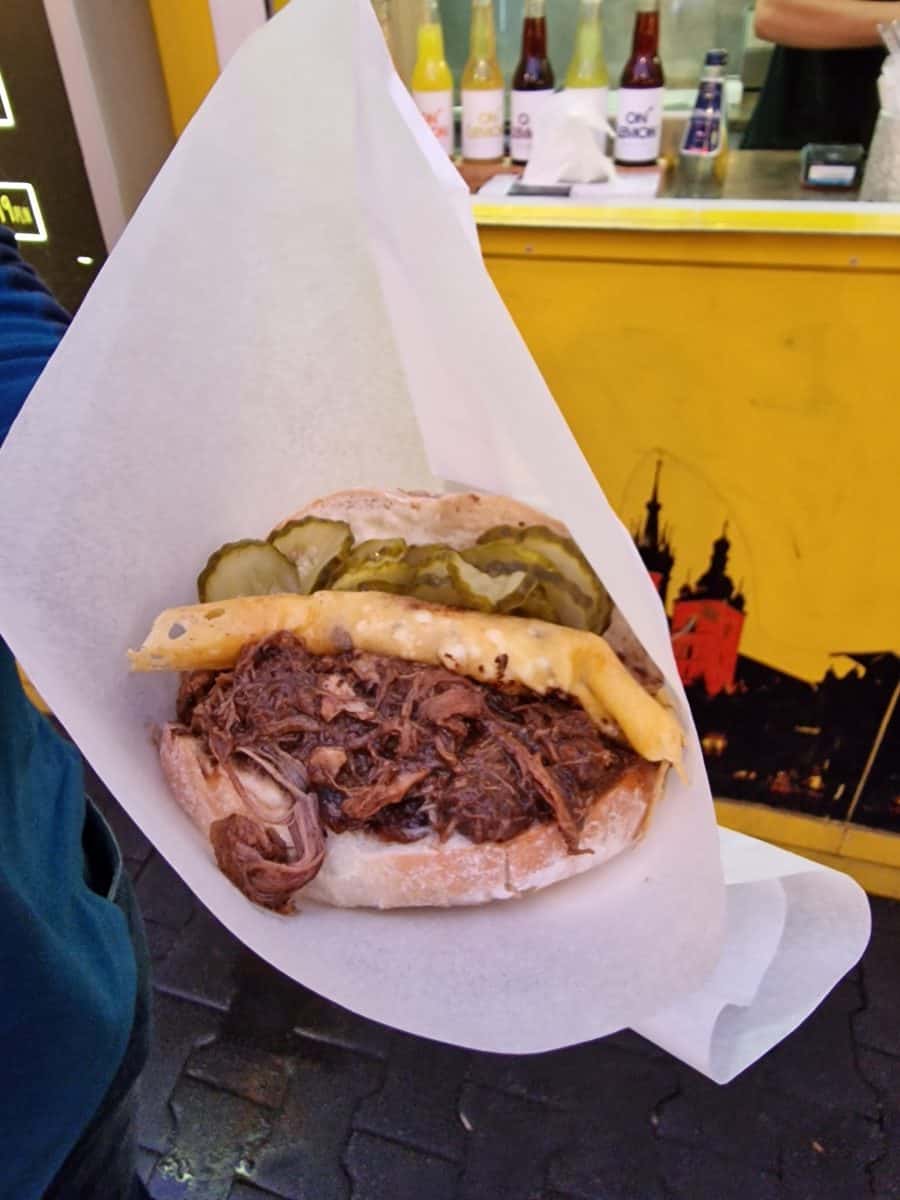
Belived to have originated as a way to use up leftover meat and sauces, Maczanka po Krakowsku is simple but that does not mean it isn’t packed with flavour.
History
This beloved dish is thought to have originated in Krakow during the 17th century as a way to use up leftover meat. Over time, it evolved into a popular and convenient meal, particularly among carriage drivers and students.
The traditional preparation involves marinating the meat in spices for approximately two days, followed by slow-roasting and stewing with onions to enhance its flavour. Today, Maczanka po Krakowsku remains a popular fast food choice.
Where to Try
Hayden ordered this from Andrus Maczanka po Krakowsku, a food truck in Judah food square. If you don’t fancy heading there, they also have a fixed restaurant not far from St Mary’s Basilica.
Andrus’ is renowned for their rendition of the dish, often regarded as the go-to spot for Maczanka po Krakowsku.
Our Thoughts
We absolutely loved it! The meat was bursting with flavour, and the addition of cheese and pickles was just perfect. Sure, it was a bit messy to eat, but every messy bite was completely worth it. Overall, a delicious and satisfying experience.
Kotlet Schabowy
History
Dating back to the 1860s, it’s likely that the kotlet schabowy was influenced by the Austrian schnitzel, although the Polish version uses pork rather than veal.
It was during the time of the People’s Republic of Poland (in the mid to late 20th century) that the dish became popular. Meat was scarce at the time, and so schabowy was a go-to favourite when people could get meat.
Where to Try
I enjoyed my kotlet schabowy with chips in the Witolda Budryka cavern of the Wieliczka salt mine, where traditional Polish food is served. However, this dish can be found in many places throughout Krakow, including restaurants and milk bars. It is often served alongside potatoes and vegetables.
Our Thoughts
The kotlet schabowy was pretty much what I expected: a breaded pork cutlet. It’s a simple dish, but it tasted lovely and had a good crunch—what more can you ask for?
Summary
Well, that’s our thoughts on the food we tried in Krakow. We definitely didn’t make an effort to try everything, something I am regretting, but that just gives us more reason to return!
And as you can tell, I didn’t get photos of all the food, and even the photos I did get aren’t perfect! But this blog wasn’t even a thought back then!
I’ve popped some links to websites where I found information on the history of each particular food, so if you want to do further reading, look below!
References
Obwarzanki – https://www.muzeumobwarzanka.com/?lang=en
Pączki – https://culture.pl/en/article/the-splendour-of-paczki-polish-doughnuts
Pierogi – https://folkways.today/pierogi-polish-dumpling/
Zapiekanka – https://culture.pl/en/article/polands-toasted-baguette-the-zapiekanka
Maczanka po Krakowsku – https://krakowbooking.com/blog/krakow-delicacies-obwarzanek-maczanka-zapiekanka-you-must-try-these-snacks
Kotlet Schabowy – https://culture.pl/en/article/a-joke-an-icon-the-classic-polish-pork-cutlet

[…] Krakow offers a wide range of dining options, blending traditional Polish cuisine with modern twists. You can try local favorites like pierogi, zapiekanka, and maczanka po Krakowsku. These dishes highlight the area’s rich flavors and history78. […]